
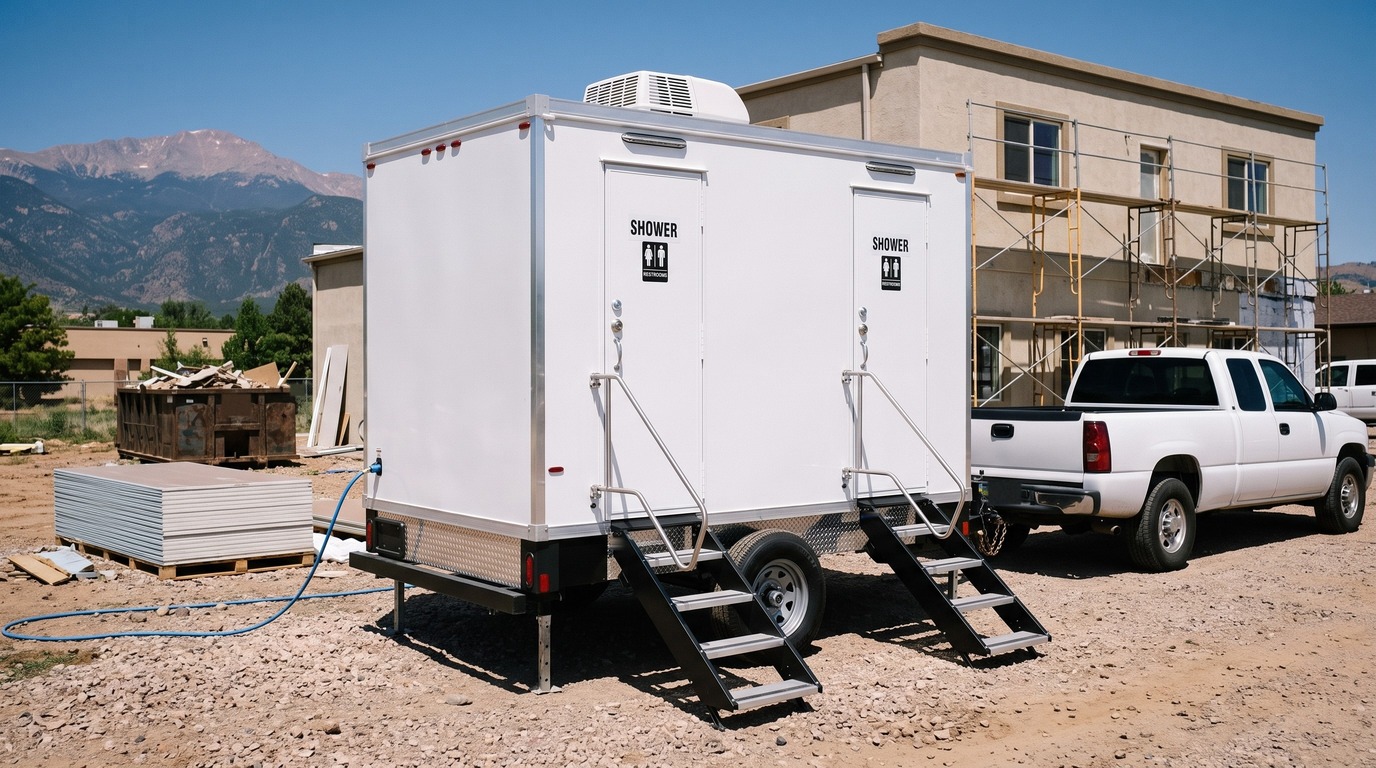
Crew favorite
Multi stall shower trailer
Every door opens on its own room, with dry floor space to change out of work clothes. Built for highway crews, campus jobs and metro remodel pads.
COShower trailers across the Centennial State
Private, heated, multi stall shower trailers for construction crews, wildfire and disaster response, film base camps, events and facility shutdowns. We set the unit, we service it on a schedule, and you stop thinking about it.
Colorado is the whole territory. Denver and the Front Range are the busiest corridor, but we run units over the divide to Grand Junction and Palisade, south to Colorado Springs and Buena Vista, north to Fort Collins, and across the passes to Ridgway and Durango.
Certificates of insurance on request, with your additional insured wording.
Front Range, mountain towns, Western Slope and the eastern plains.
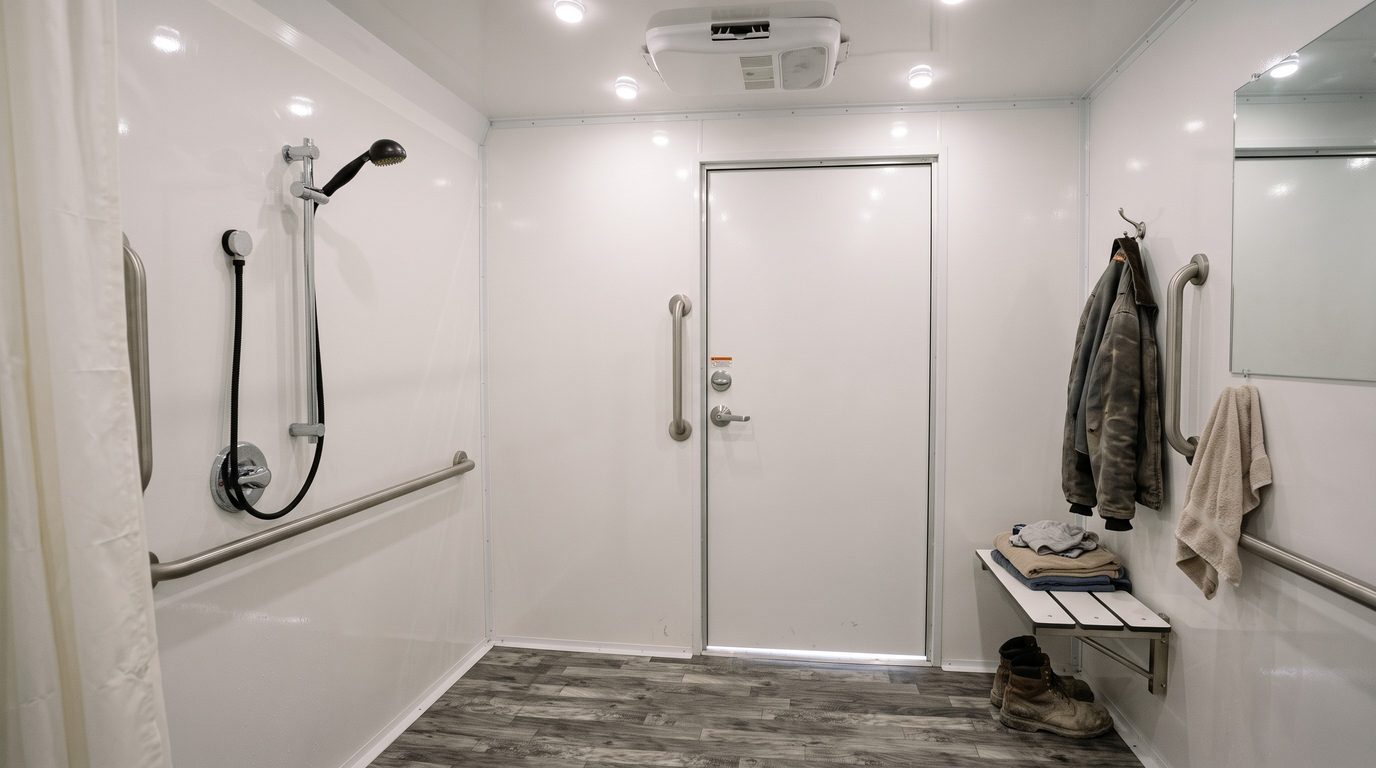
Every shower is its own locking room with a dry place to change.
Sized so a full crew rotates through without the temperature dropping.
AStart here
Send the site and the dates and we come back with what fits and when it can be there. If it is urgent, call the dispatch line and skip the writing.
Rather put it in writing? The request page takes the ground, the dates, the headcount and what is already on site, and it reaches the same desk this number does.
SetCrew notes
Notes from Front Range and statewide rentals. More get added here as crews send them in.
Rated 5 out of 5
We had the 8 room unit on a warehouse job for four months. What sold me was that the same driver kept showing up. He knew where the pad was and where the hose bib was, so I never had to meet him.
Rated 4 out of 5
Flat dirt, no water, no sewer. They ran it on tanks the whole time.
Rated 5 out of 5
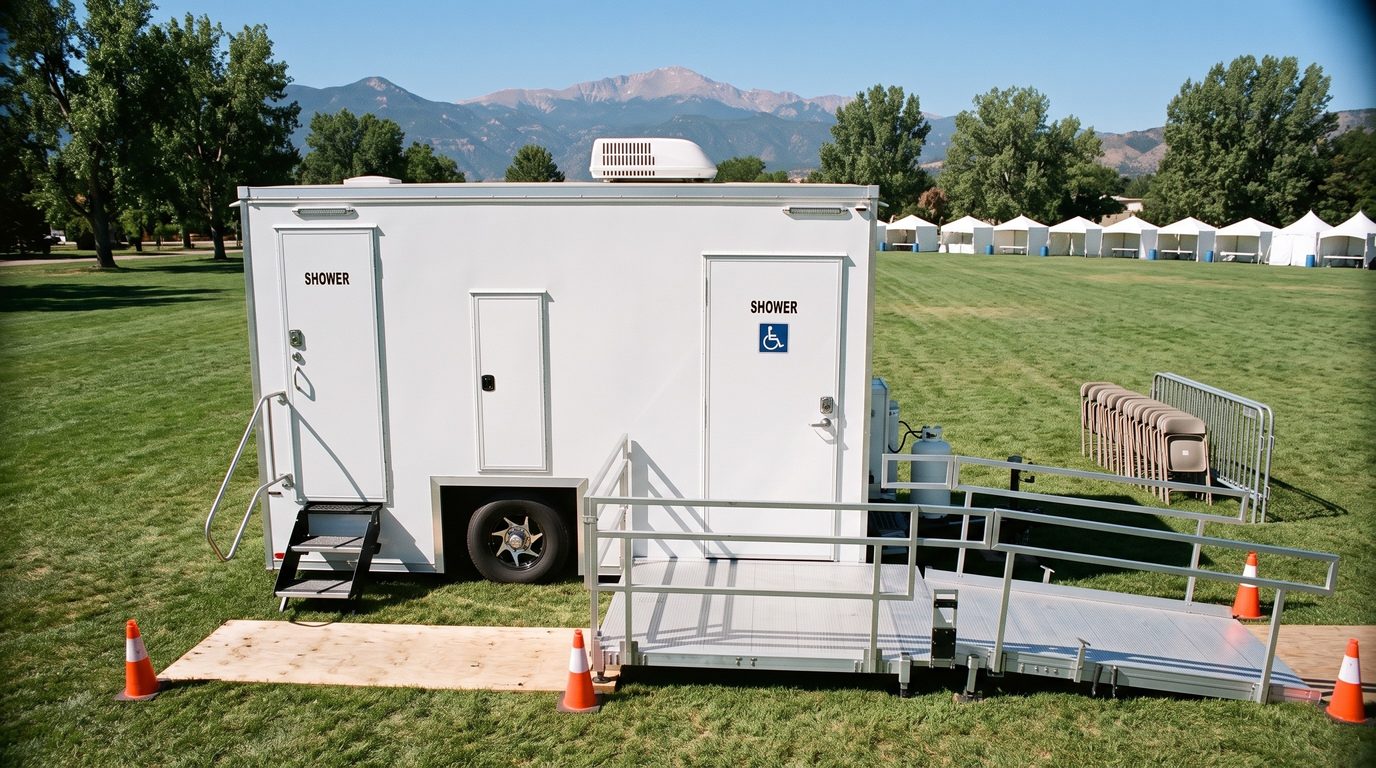
I asked for an accessible unit late and they still had one. The ramp came with it and we did not have to build anything.
BColorado conditions
A shower trailer that is fine at sea level in a mild climate is not automatically ready for a pad at eight thousand feet in January. Everything about how we spec, deliver and service a unit starts with what this state does to equipment.
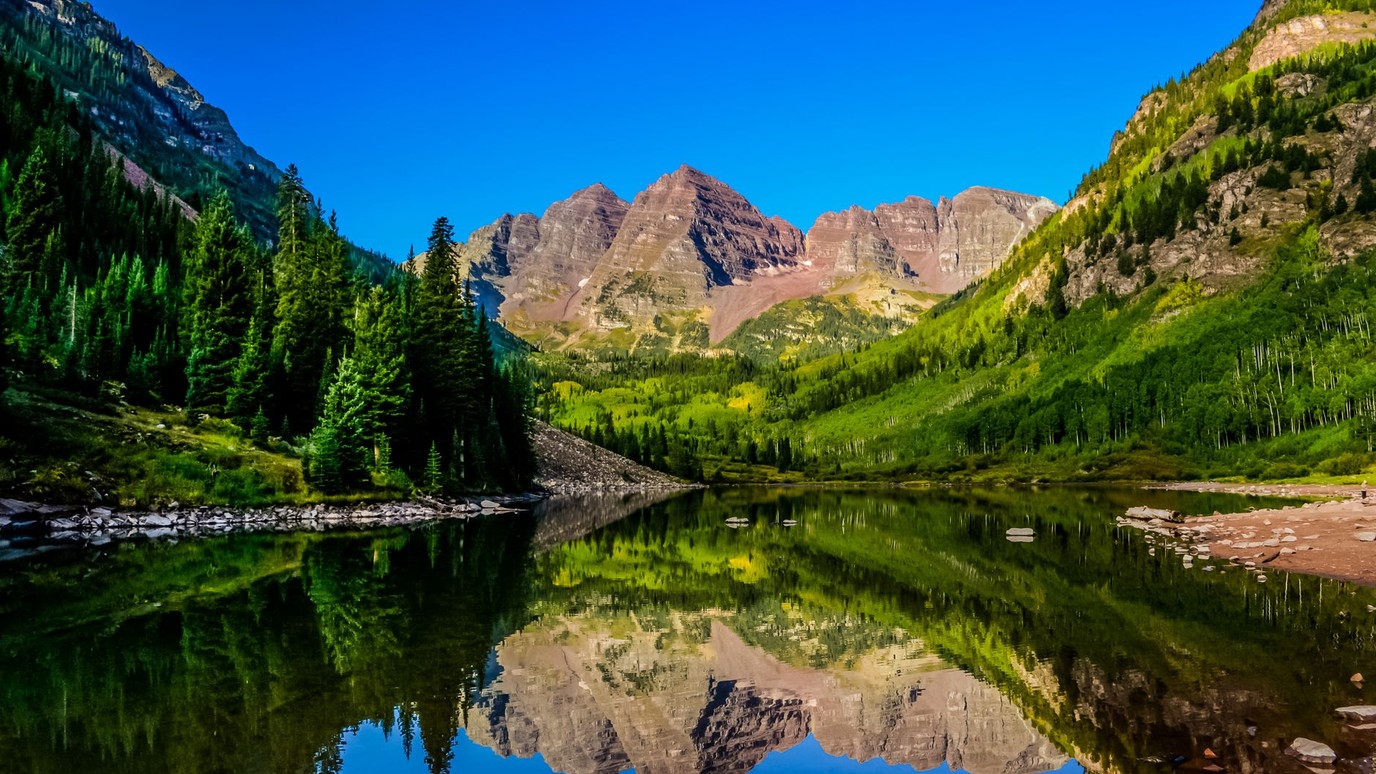
Thin air changes burners and generators. Heaters and generators are configured for the elevation of the actual pad, not for a spec sheet written at sea level.
Months of freeze and thaw, not a cold week. Heat traced lines, continuous interior heat, a heated plumbing bay and skirting are the winter baseline, and the generator never gets shut off overnight.
Firm ground in February is soup in April. We place for the pad's worst condition, with road base and cribbing where the frost is going to come out.
It no longer has a start date. Fire camps and emergency staging with no utilities are normal work, and during red flag stretches we watch where the forecast says trouble is coming.
The far corner is a long haul over passes. We quote drive time honestly, follow Colorado chain and traction laws, and move the date rather than put a driver on a closed corridor.
No water, sewer or power is the common case. Water hauling, generator power and a pump schedule get planned before the trailer rolls, with one person owning each leg.
None of that is one condition applied evenly across the state. Colorado is five or six operating environments sharing a border. The Front Range corridor is flat to rolling, mostly paved, and carries the large majority of the population and the permitted construction volume, so the usual question there is access rather than survival. The high country above seven and a half thousand feet is where altitude, deep cold and road closures converge hardest, and where a unit that would be fine on a valley floor in January is the wrong unit entirely.
West of the divide the Grand Valley runs hot and dry in summer with real wind and long distances between anything. The San Juans in the southwest add narrow two lane access over passes that close for avalanche control, plus a monsoon season bringing afternoon lightning and genuine flash flood risk on dirt approaches from July into August. Out on the eastern plains the terrain stops being the problem and wind, distance and service response take over instead.
The practical effect is that the right answer changes with the address. A generator sized comfortably for a metro pad can be genuinely too small on a mesa top, because engines lose a few percent of their output for every thousand feet they climb. Ground that carried a loaded truck in February can be too soft to use in April once the frost comes out of it. We plan a placement for the worst condition it will see across the whole rental rather than the condition it is in on delivery day, and that one habit prevents most of what otherwise goes wrong.
CSpec sheet
These are finished units, not a hose in a plastic box. Every trailer is inspected before it leaves and tested again once it is set and connected on your site, because the only test that counts is the one on the pad you are actually using.
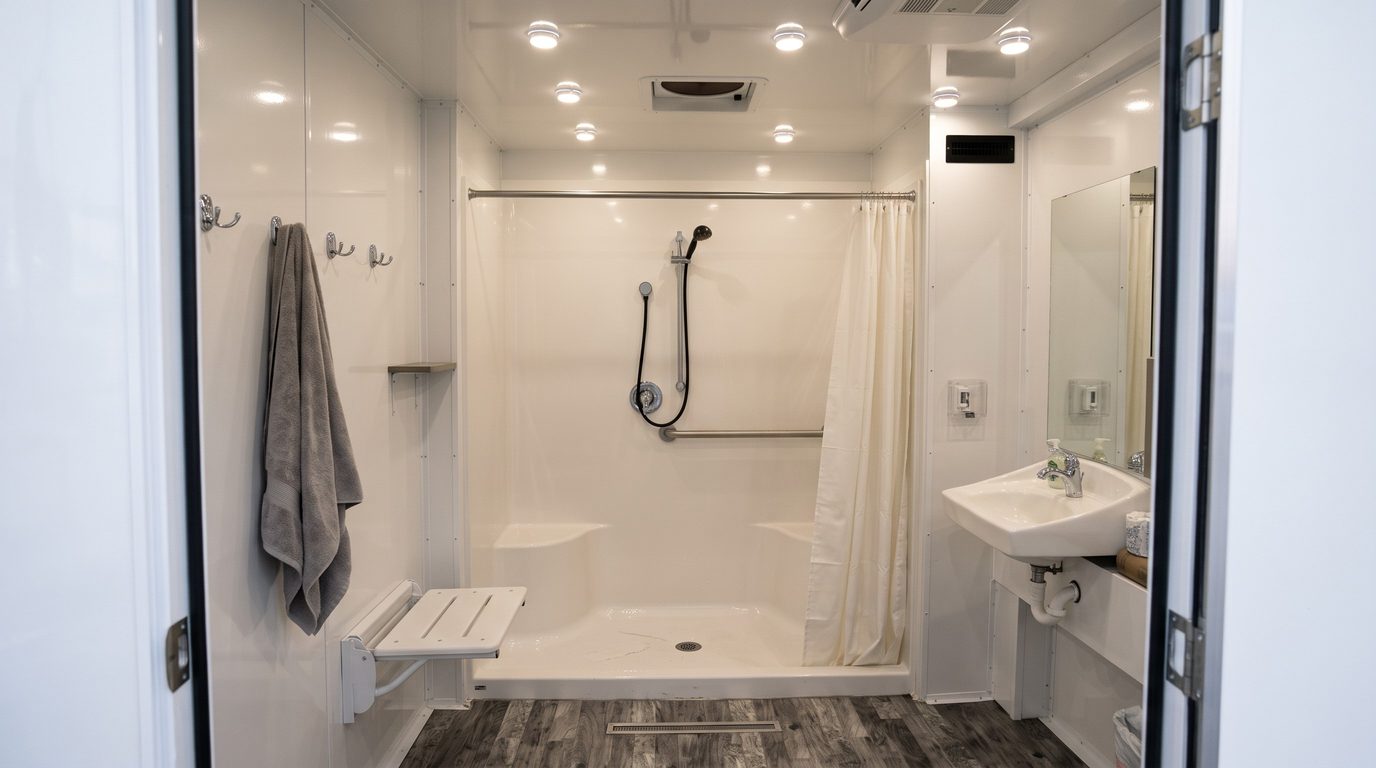
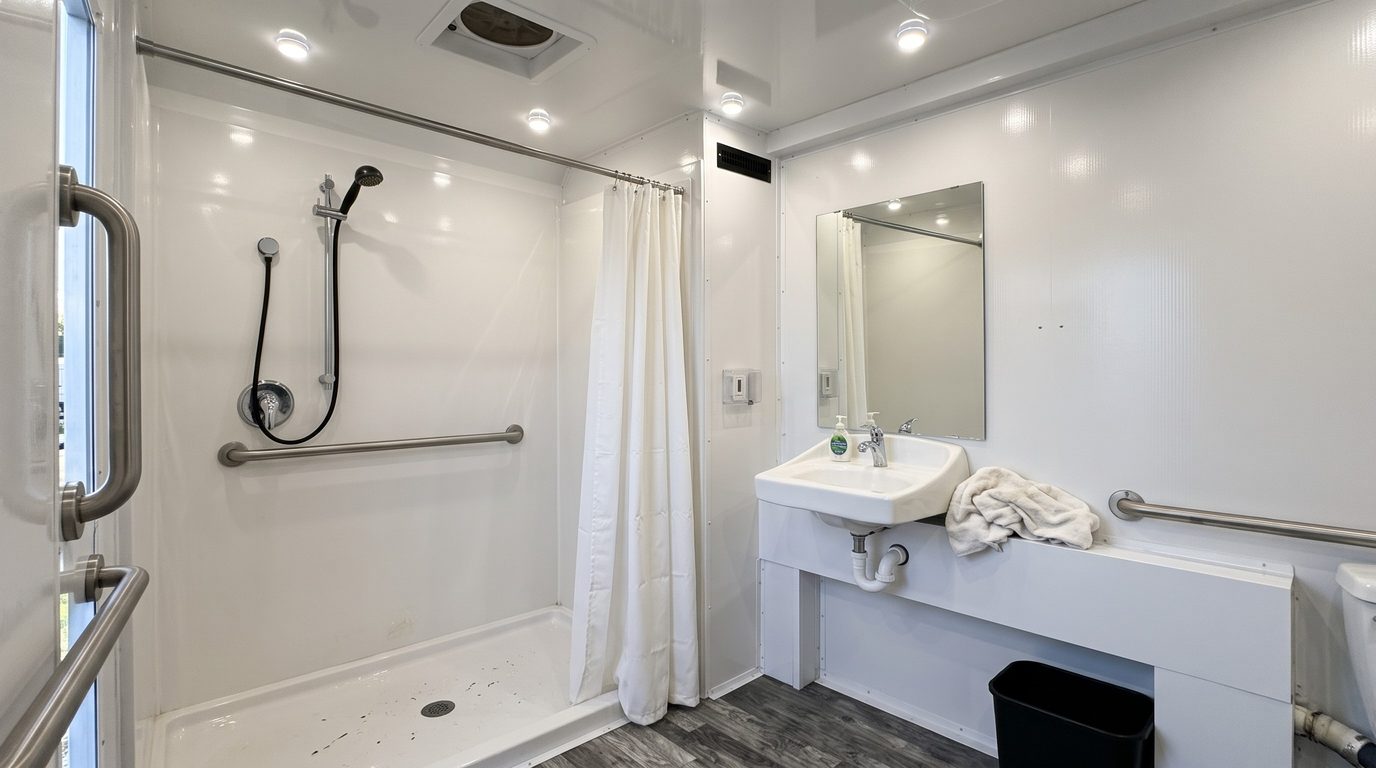
Each shower is its own enclosed room with a locking door and a dry area to change and set your clothes down. No shared bay, no curtain, no waiting in the open in front of everyone.
On demand heating rather than one small tank, so the tenth person through gets the same shower as the first. We size the unit against your headcount and your shift pattern before we quote it.
Heat for the months that matter here, air conditioning for July on the plains. The inside of the trailer stays comfortable whether it is nine degrees in Buena Vista or ninety eight in Grand Junction.
Mirrors, counter space, proper lighting and running water at the sink. It reads like a restroom in a building, which is the entire reason people rent these instead of the cheap option.
Accessible trailers can be arranged for sites and events that require them. Tell us early in the conversation so we can confirm one for your exact window rather than scrambling the week before.
Freeze protection is built into how we spec a winter rental in this state, not an extra we sell you later. We walk your site contact through the overnight routine before we leave.
Most units run on common site power and a garden hose supply. Where a site has neither, we plan around it with fresh water deliveries, scheduled waste pumping and a generator worked out ahead of time.
A small wedding might need one trailer. A fire camp or a bridge job might need several set as a row with a shared service schedule. The sizing conversation happens before anything is booked.
DJob types
Most of our calls come from people who have already tried the alternative. A crew driving forty minutes each way to a truck stop, a base camp running on a garden hose, a facility with the hot water shut off for three weeks. A shower trailer solves the same problem in every one of those cases, which is why the customer list looks so mixed.
 01
01
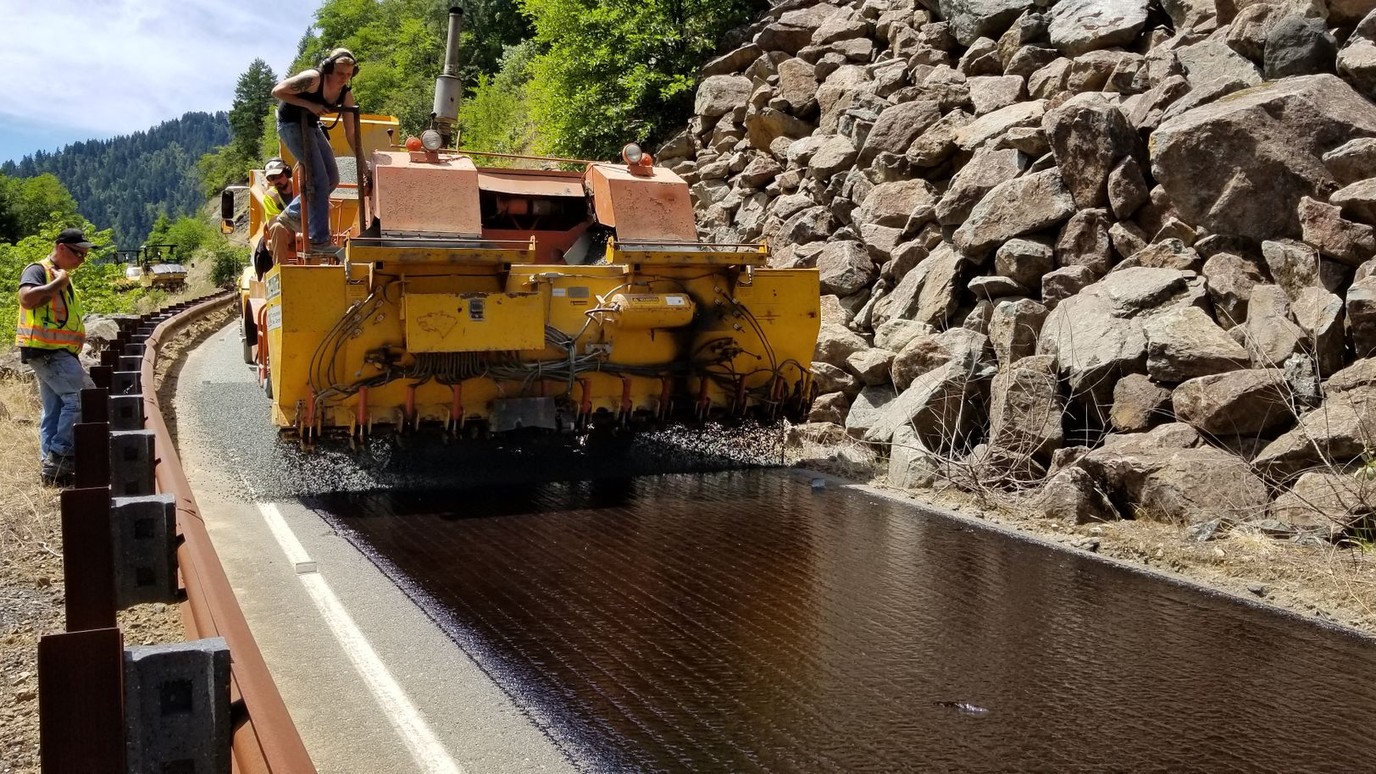
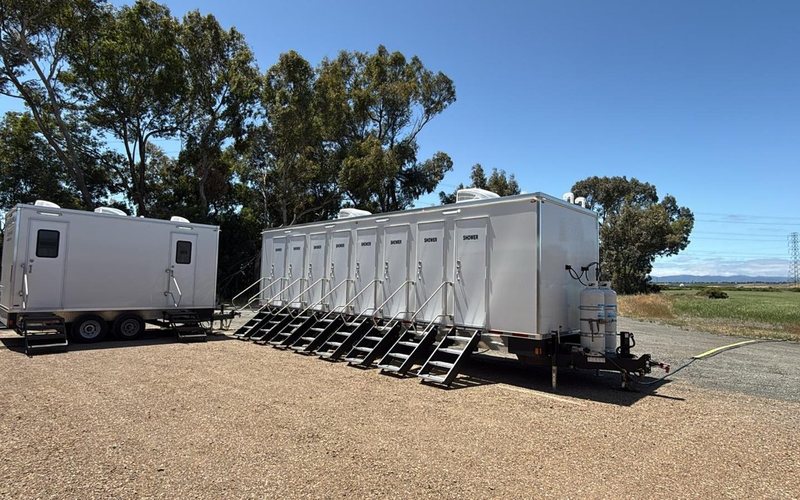
Commercial builds in the metro, road and bridge work, wind and solar out on the plains, and crews stationed where the nearest facility is twenty miles of gravel away.
 02
02
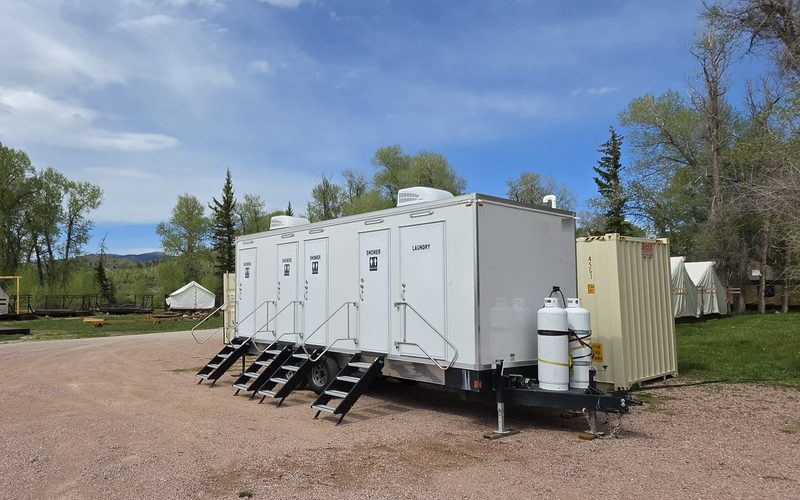
Fire camps, flood recovery, blizzard and utility restoration. We can set quickly and keep a unit serviced for as long as the operation runs.
 03
03
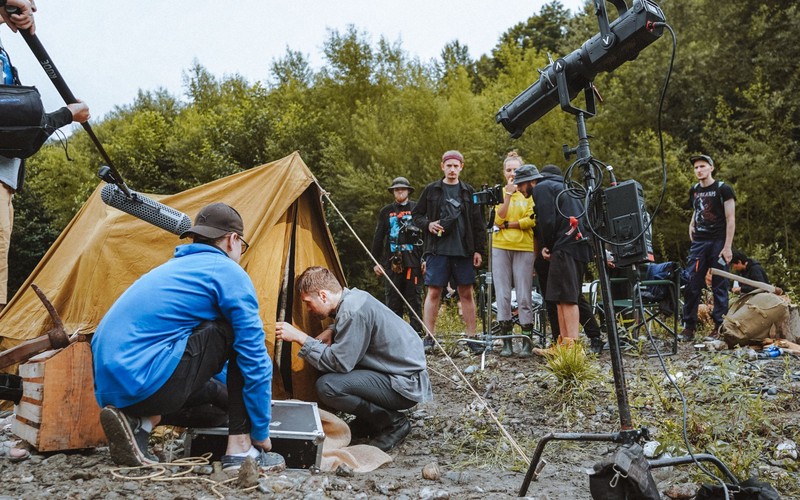
Canyon and mountain base camps where the nearest hotel is an hour of daylight away. Quiet units, good lighting, nice enough for talent.
 04
04
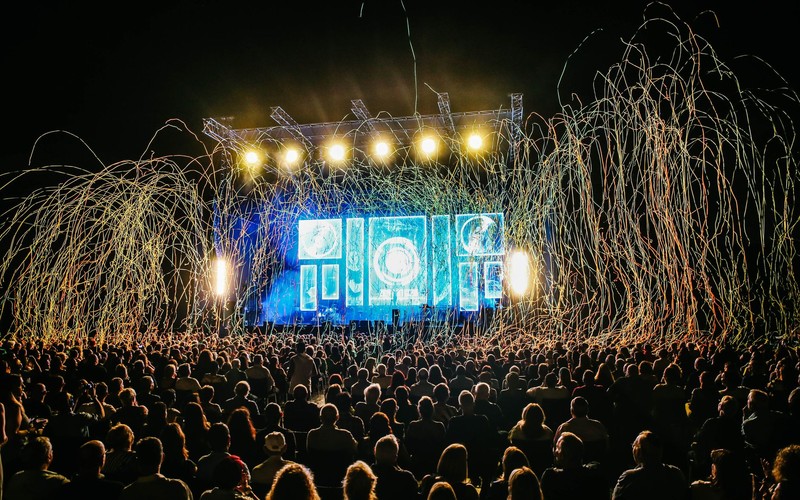
Multi day music festivals, rodeos, county fairs and campground events where both guests and staff need somewhere real to clean up.
 05
05
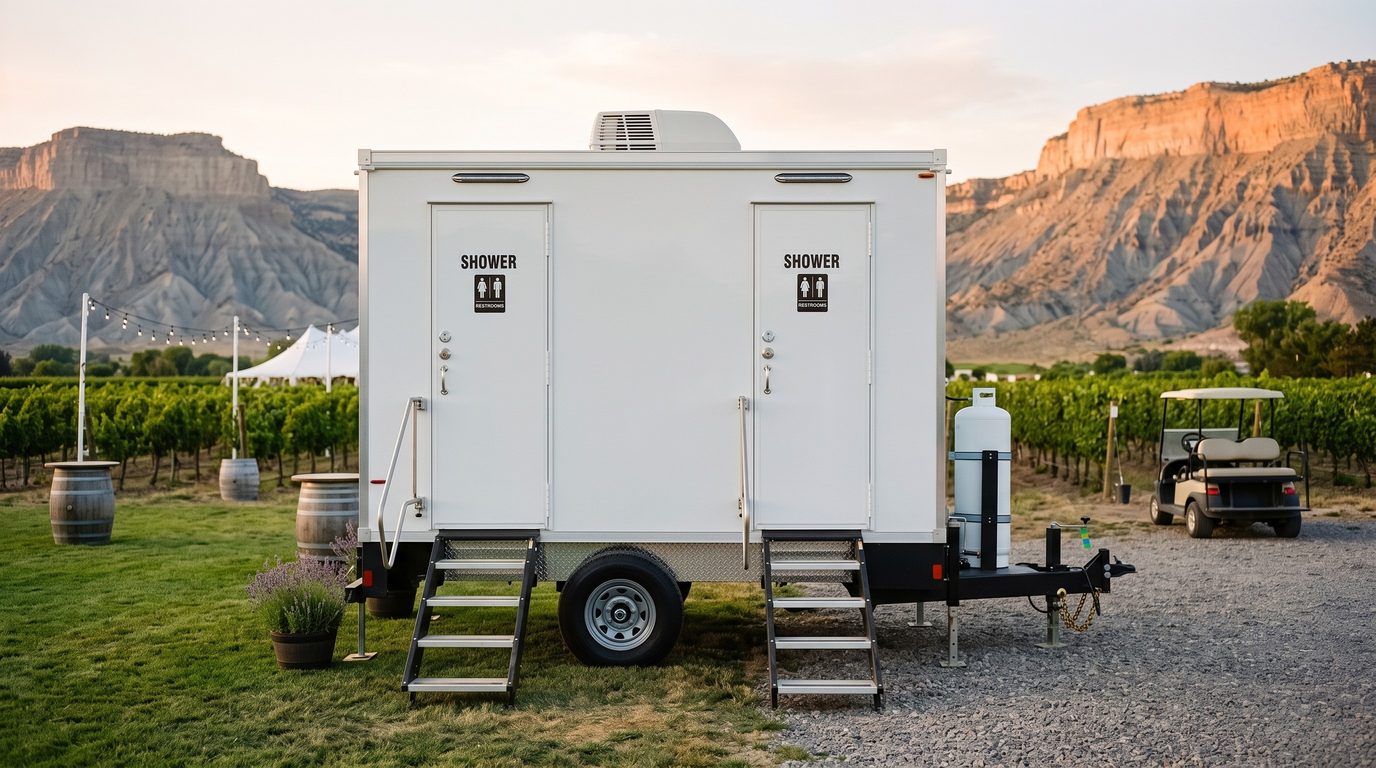
Ranch venues, mountain property and family land with limited plumbing. Finished interiors that fit the setting instead of fighting it.
 06
06
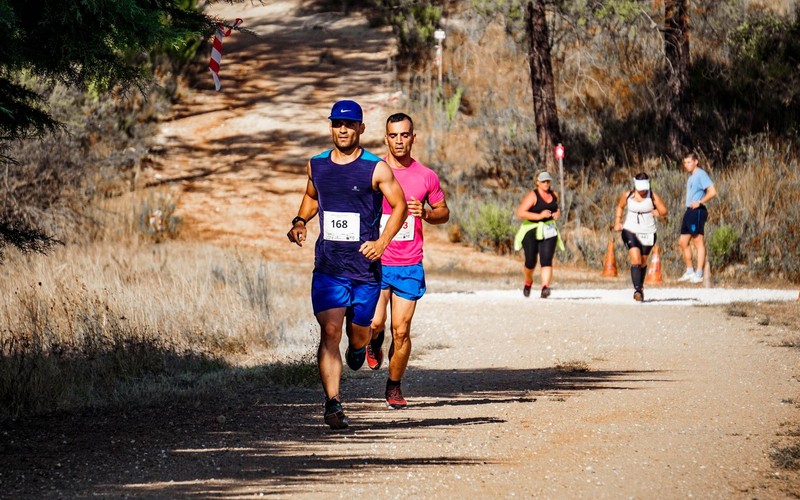
Trail and ultra races, cycling stage events, tournaments and youth camps that need real shower capacity for a weekend push.
 07
07
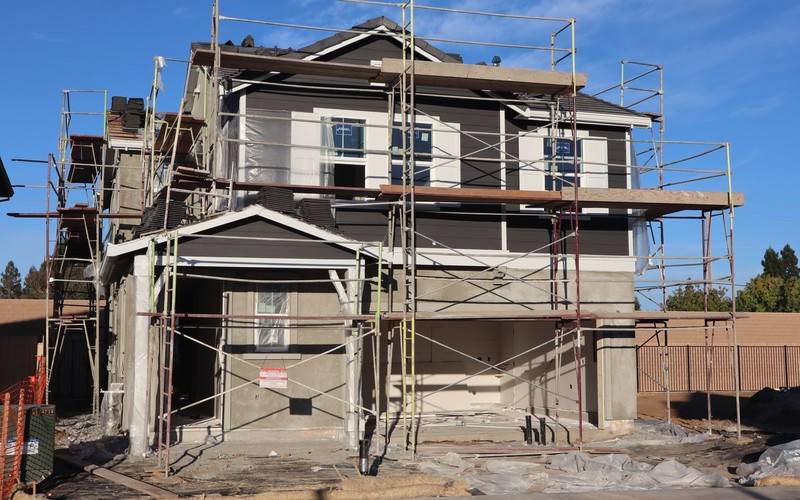
Houses under renovation, apartment complexes, schools and care homes running without hot water while plumbing or a boiler gets replaced.
 08
08
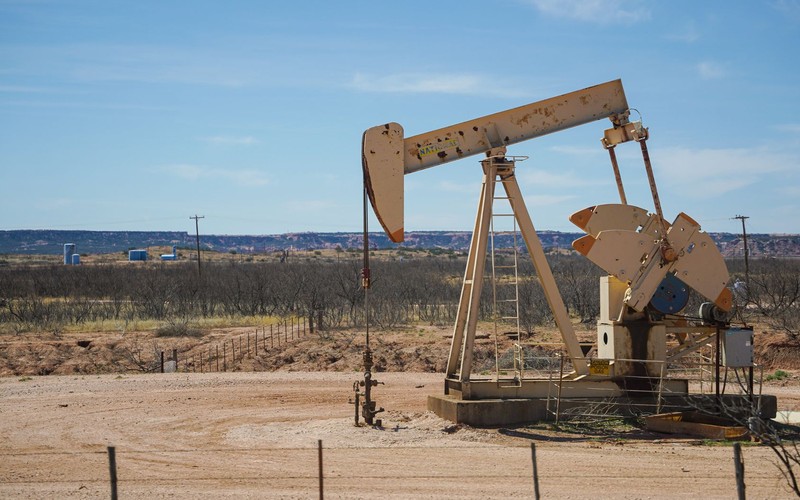
Oil and gas work on the Western Slope, pipeline spreads, ski area staff housing and survey crews living out of a staging yard.
What ties that list together is not the industry, it is the shape of the problem. Multi day duration, a concentrated headcount, a venue or a pad with limited or no permanent plumbing, and often enough elevation and distance to make water, power and waste genuinely awkward. A highway crew in a right of way needs the same thing a gas patch camp on a mesa needs. So does a fairground over a holiday weekend, and so does a fire base camp. The job changes. The requirement does not.
The regulatory floor sits lower than what most of these jobs actually need. Federal construction sanitation rules require accessible toilets scaled to crew size and handwashing with soap and running water where a water supply exists, and they are explicit that hand sanitizer on its own does not satisfy the requirement. Showers are not on that list at all. What puts them on a site is the point where going home to get clean stops being realistic, which on remote or multi day work arrives quickly and then does not go away.
The other thing these jobs share is that the failure mode is boring rather than dramatic. Units do not usually break. They run out of hot water because the heater was configured for the wrong elevation, or they stop because a gray tank filled faster than an opening estimate said it would, or they freeze because somebody shut the generator down overnight to save fuel. Every one of those is a planning problem, and every one of them is settled before the truck leaves rather than after it arrives.
ETerritory
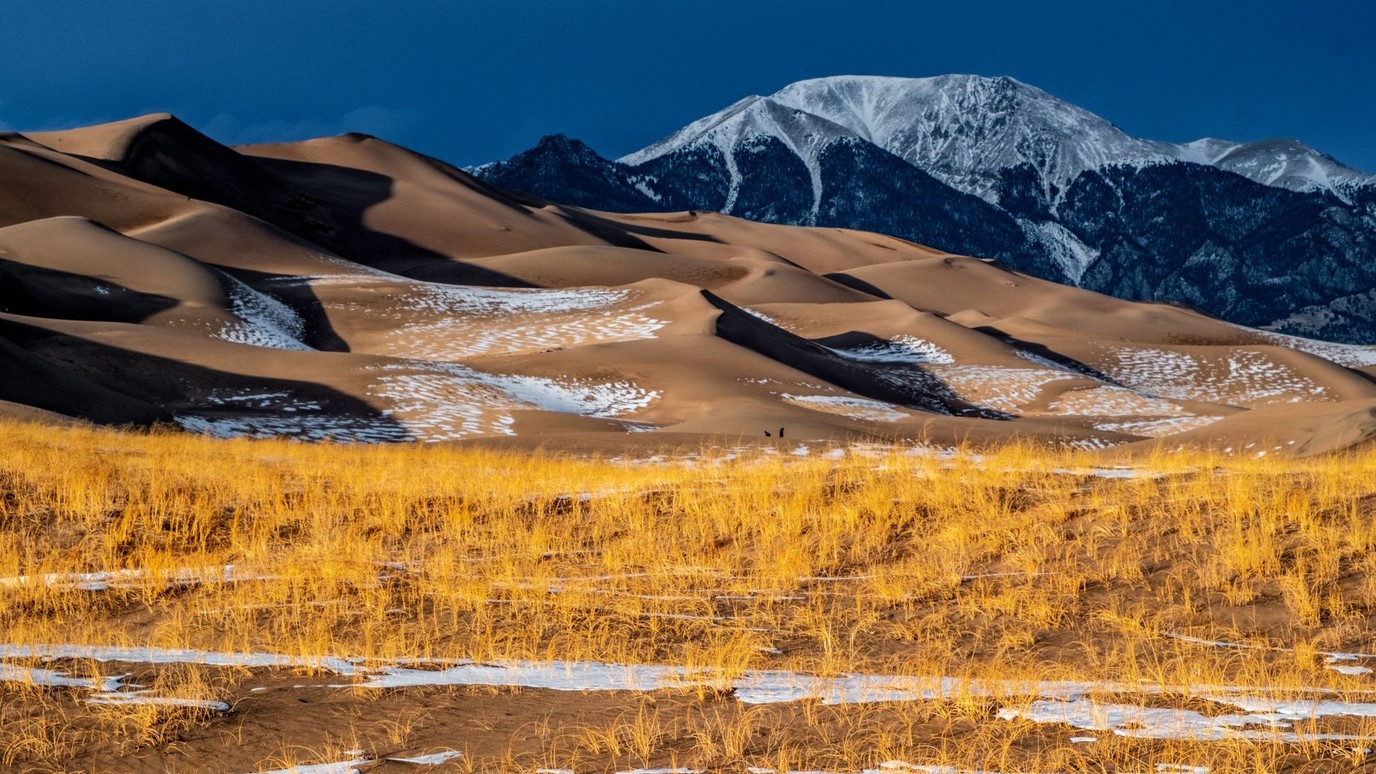
The whole state is our service area. Front Range metro, the I 70 mountain corridor, the Western Slope, the San Juans, the San Luis Valley and the eastern plains. If a project sits close to a border we will usually cross it, so ask rather than assuming the answer is no.
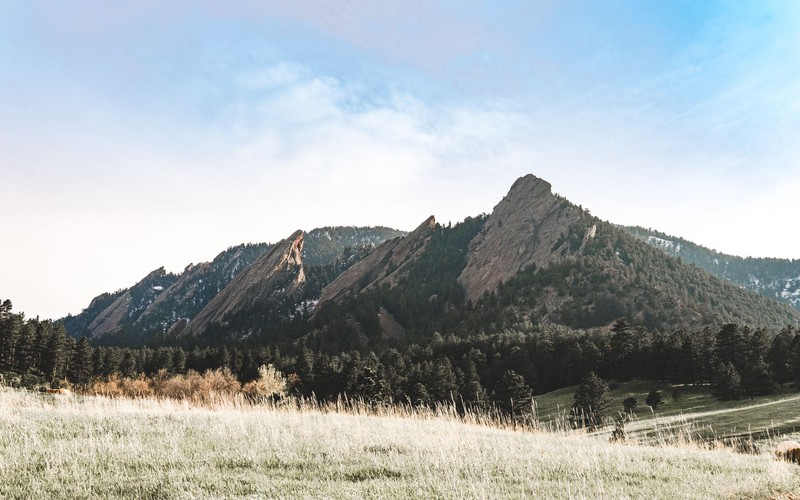
Denver and Englewood are the metro anchors, with Colorado Springs to the south and Fort Collins to the north on I 25. Metro sites usually have hookups; the question is where the service truck gets in.
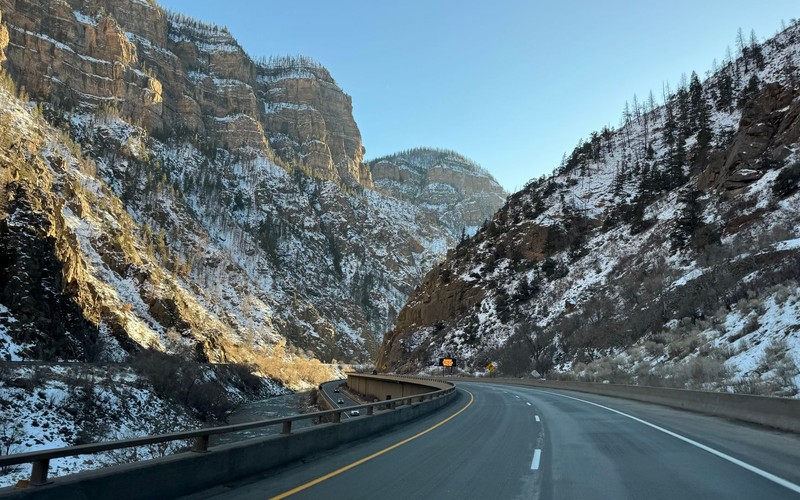
Over the divide to Grand Junction and Palisade, down through Delta County and Ridgway, and out to Durango in the southwest corner. Buena Vista covers the central mountains. Passes, chain laws and the forecast decide the window.
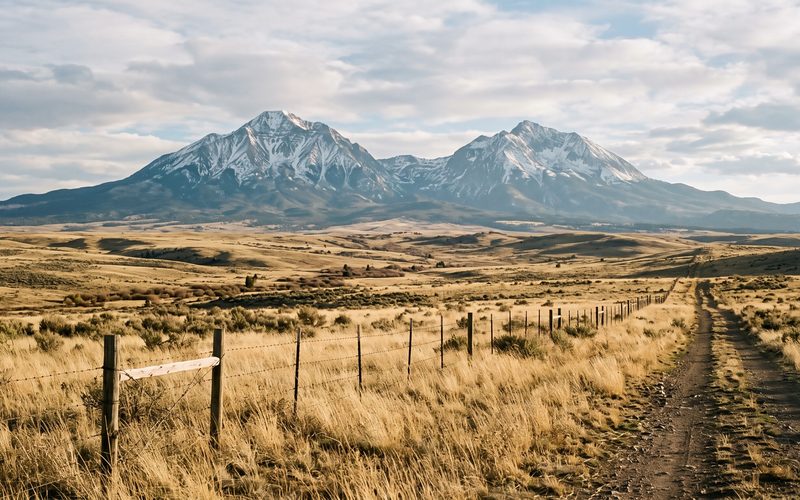
The eastern plains, the San Luis Valley and the southern counties are all delivery territory. Wind, distance and generator sizing matter more than grade out here.
Region by region detail is on the coverage page.
Those towns are where our crews have actually set trailers, and between them they cover most of what this state does to a delivery. Metro traffic and tight infill pads on the Front Range. A long haul over the Continental Divide to the Grand Valley. Red rock and high desert on the Western Slope. Mountain passes on the road down to the southwest corner. Ranch and orchard country in the valleys south of Grand Junction, where the last mile is frequently the whole problem. A high valley placement in the Arkansas headwaters where generator sizing matters more than anything else.
The list is not the limit and it is not meant to read as one. The whole state is the territory, and the reason we name places rather than draw a radius is that the named ones carry information. Knowing how a lease road behaves after an afternoon storm, or which approach into a river town a long unit can actually turn around in, is worth more than a map with a circle on it.
What decides a haul is drive time rather than distance, and in Colorado those two things separate quickly. An address that looks close can sit on the far side of a corridor that shuts repeatedly through the winter for storms and avalanche control. So we quote the window honestly, including the times when the honest answer is that same day from the other side of the state is not realistic. The locations page goes through the five biggest markets one at a time, then the rest of the map by region.
SetFleet
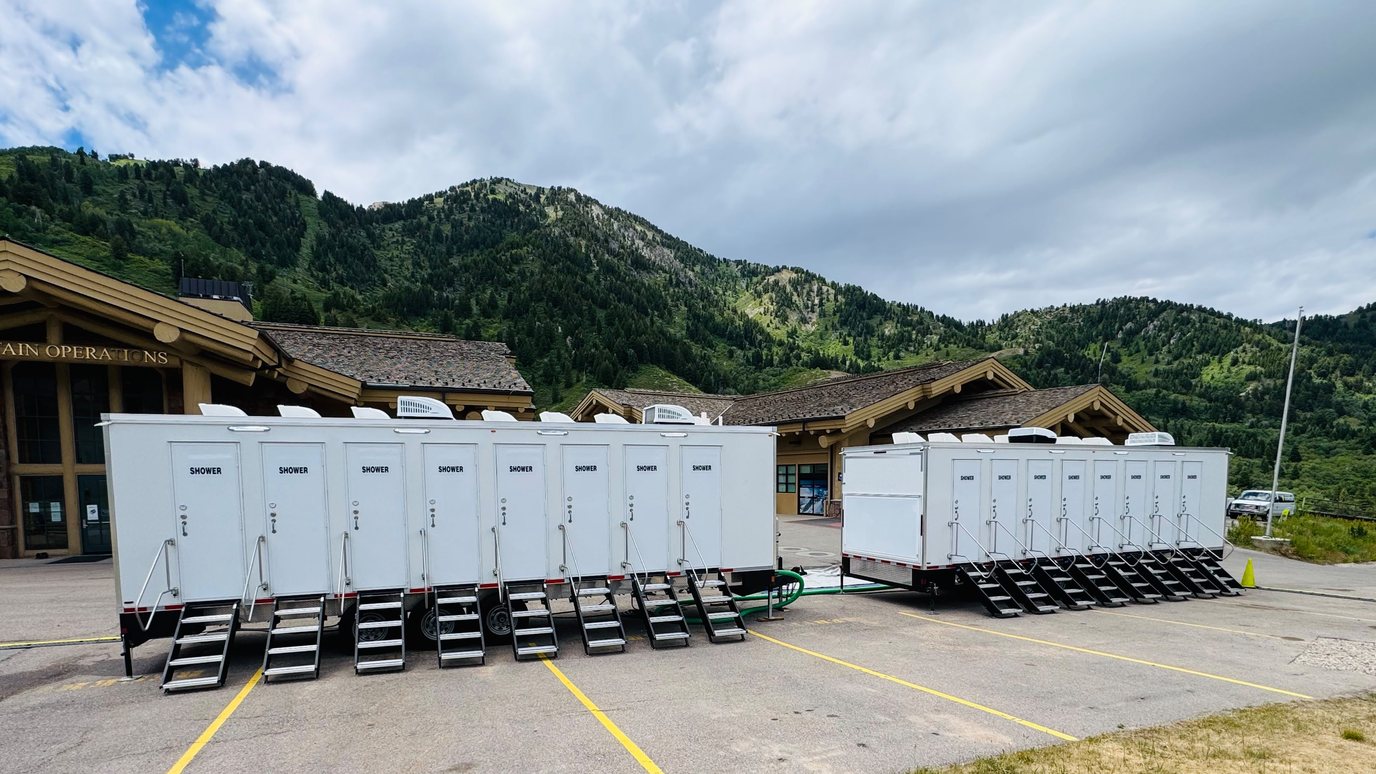
Private stalls, on demand hot water, and climate control in every unit. Match stall count to a Front Range shift change, a high country base camp, or a Western Slope pad with no hookups.
Crew favorite
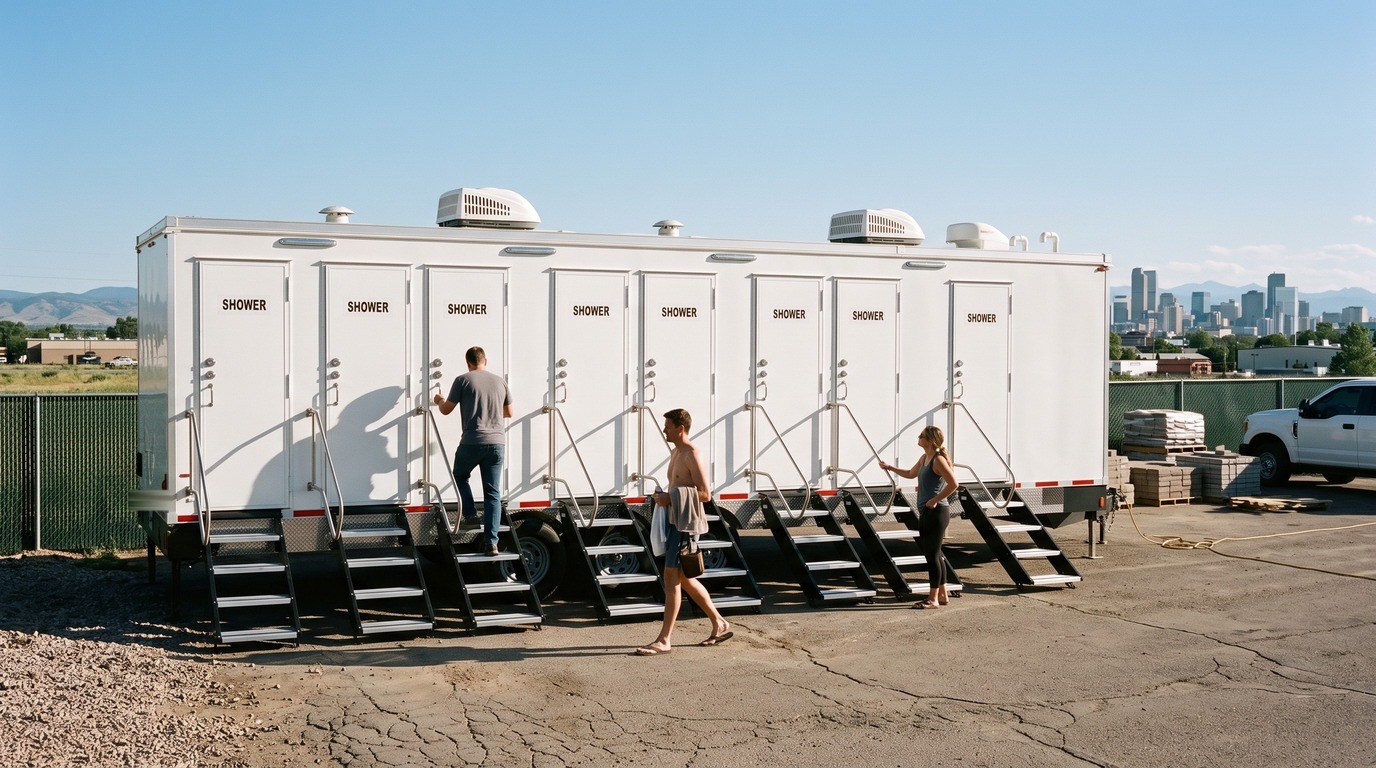
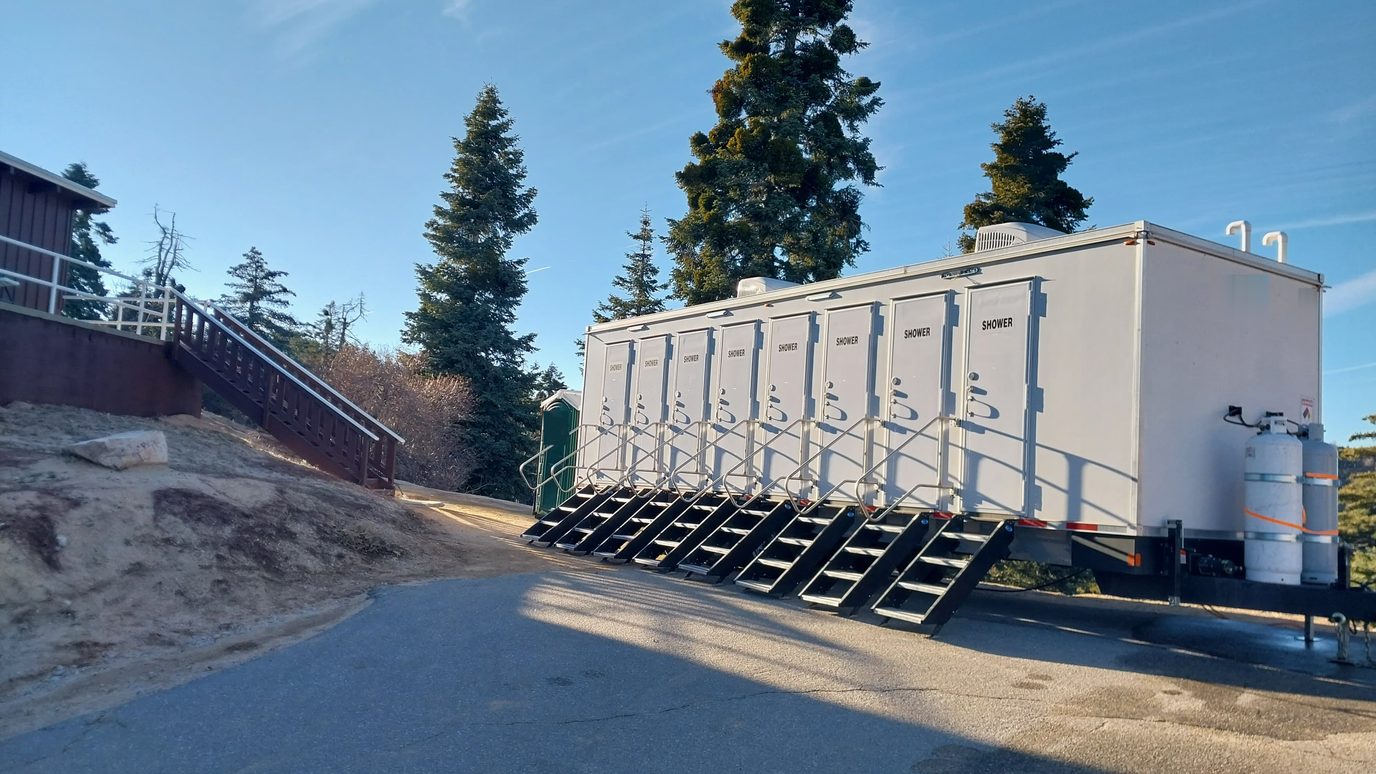
Every door opens on its own room, with dry floor space to change out of work clothes. Built for highway crews, campus jobs and metro remodel pads.
High headcount
Eight doors means a shift change does not turn into a queue in the cold. Heat for Front Range cold snaps and roof AC for summer plains heat.
Remote pads
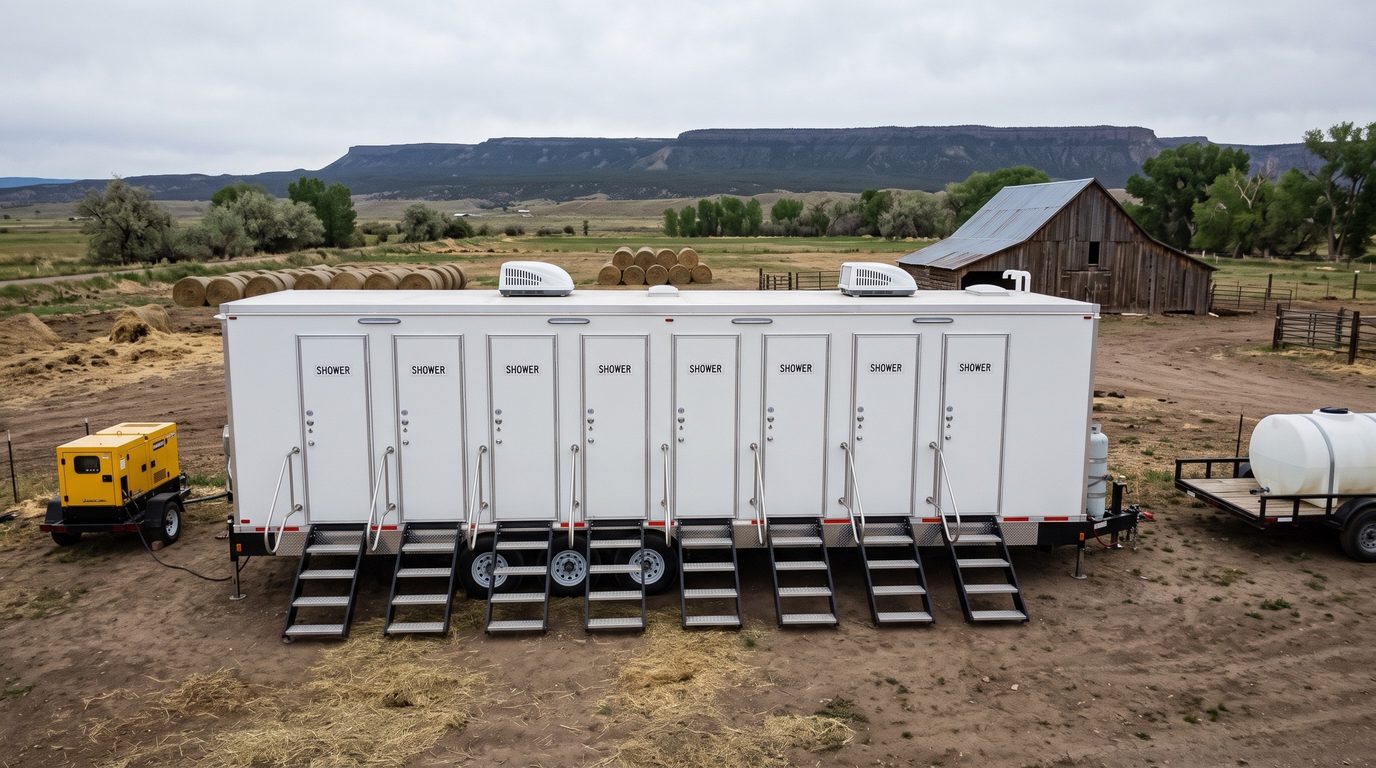
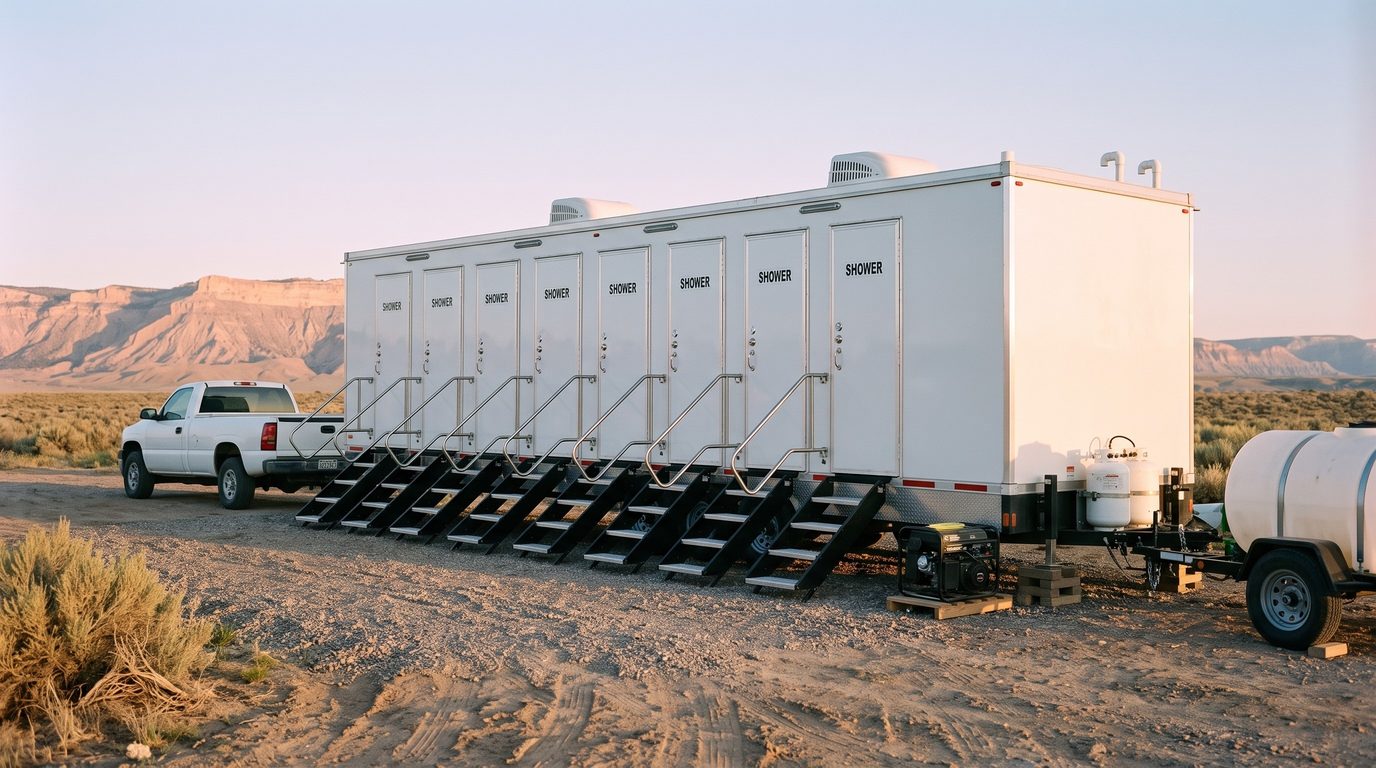
Hauled fresh water, waste tanks and generator power for Western Slope energy work, ranch crews and pads with nothing to plug into.
Inside the stall
Locking doors, hot water that holds through morning turns, and a warm place to change before you walk back into the wind.
SetOn site
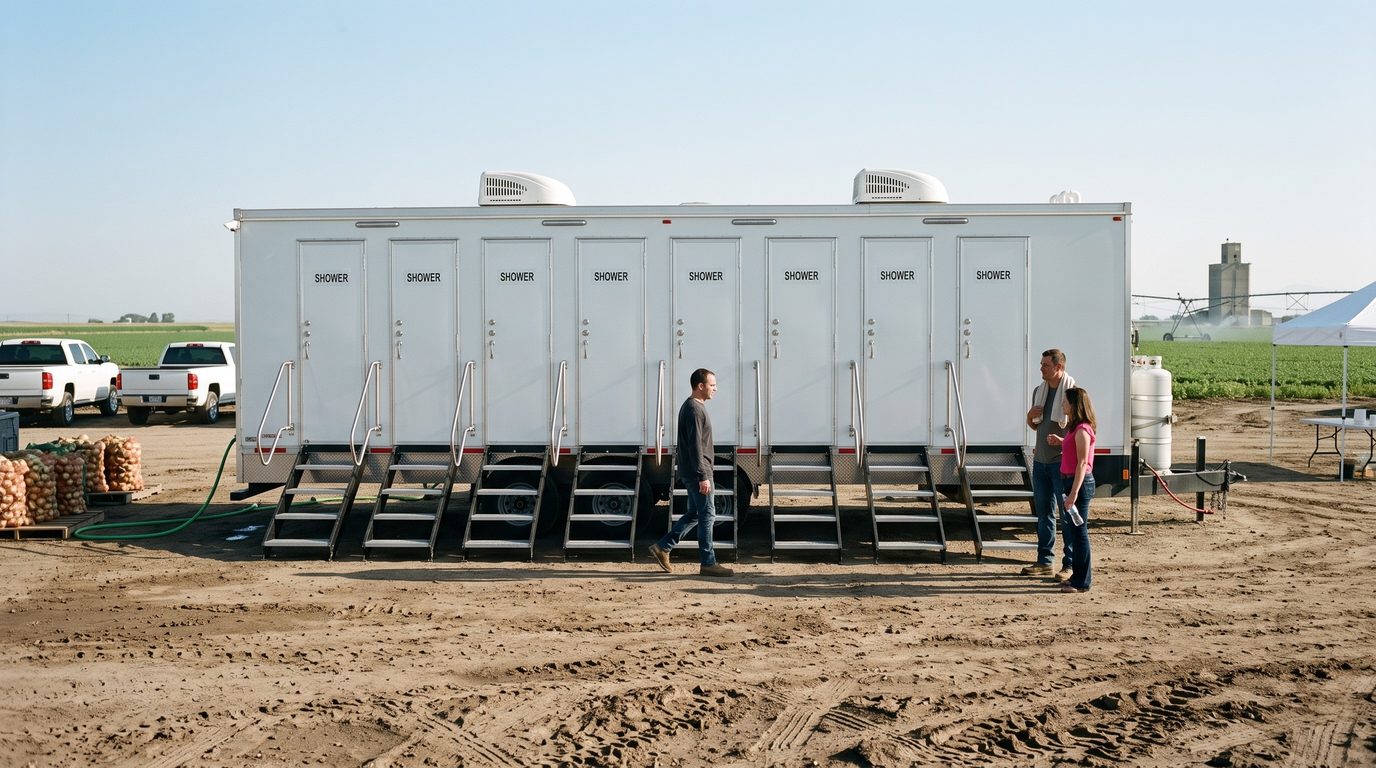
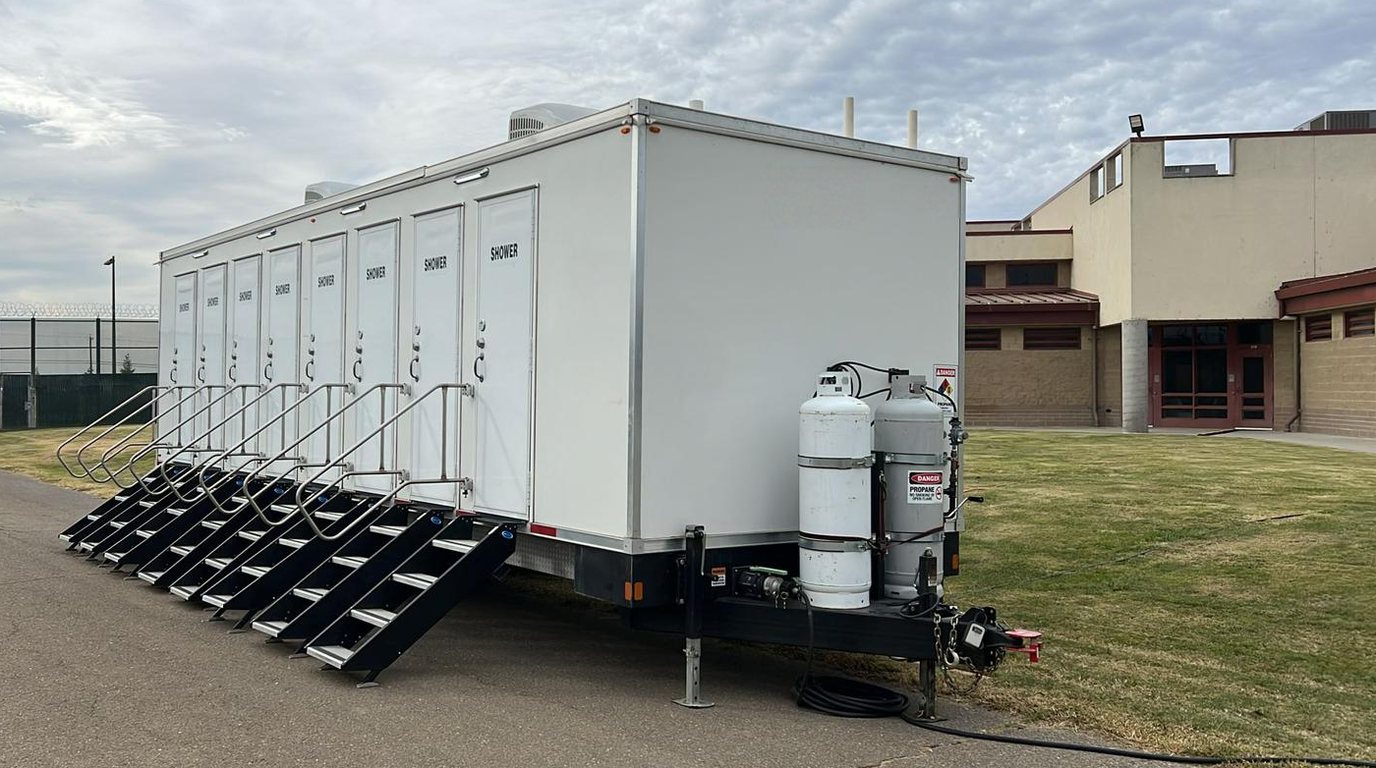
A Weld County farm crew, an ADA unit at a Front Range event, a Western Slope pad below the Book Cliffs, a unit on a facility yard and the inside of one private stall.
FLifecycle
Colorado adds a few steps other places do not. Grade, road width, snow, elevation and the weather turning over in an afternoon all change how a rental is planned. Here is the sequence from the first call to the empty pad.
Before anything is scheduled we go through headcount, shift pattern, site access, grade, turnaround room and what utilities exist. Mountain and canyon sites get a closer look, because the approach road usually decides the whole plan.
We hold the unit and pick a delivery window that accounts for the forecast and the pass you are on the far side of. If a storm moves the date, we move with it rather than leaving a driver stuck.
The driver sets and levels the trailer, connects the available power and water, runs every stall to confirm hot water and drainage, then walks your site contact through daily operation and overnight shutdown.
For anything past a short weekend rental we come back on a fixed schedule to pump waste, top off fresh water where there is no supply, clean the interior and restock. Nobody on your side has to remember to call us.
Schedules in this state slip constantly, usually because of weather. Extending a rental is normally workable with a little notice, and adding a second trailer mid project is a common request rather than a strange one.
At the end we drain and winterize as the season requires, disconnect, pull the unit and leave the pad clean. You get the site back the way you handed it over.
Two of those steps do more work than the rest. The first is the site check, because almost everything that goes wrong with a placement was visible in advance to somebody who knew what to ask. How steep the approach is and for how long. Where a rig can come about near the drop point, since reversing a long unit half a mile in the dark ends badly. What is under the tires after rain, because packed gravel holds and new fill does not. What hangs over the road, since limbs and utility drops set the height limit for the entire route. And who keeps the lane open once winter arrives, because an approach cleared for the delivery and then ignored will strand a service visit two storms later.
The second is the walkthrough at the end of delivery day. A unit that is set correctly and explained badly still fails in the second week. On a pad outside Alma, at more than ten thousand feet, that walkthrough takes about fifteen minutes and happens face to face with your site contact. On a winter placement that conversation includes the one instruction that matters most, which is that the generator stays running overnight. It is the cheapest insurance on the site and it is the thing a well meaning person switches off first.
After that the rhythm takes over. Service visits land on the agreed cadence, get revised once a real week of use has shown what the tanks actually do, and then run without anybody on your side having to chase them.
GCommon questions
If your question is not here, call the dispatch line. You will get a person who has actually set these units on Colorado ground, not a script.
Winter rentals are routine for us. Units are heated and prepared for cold conditions before they leave, and we go over how your crew should run and shut down the trailer overnight. Tell us the elevation and how exposed the pad is, because a windy ridge at nine thousand feet and a sheltered lot in Denver are two different plans.
Yes. We deliver to mountain sites constantly and altitude is rarely the limiting factor. What decides a high country job is the road in, the grade of the approach, whether a truck and trailer can turn around, and whether the route stays open in the season you are booking.
Most of our placements are on gravel, packed dirt or a compacted pad. It needs to be reasonably level and firm enough not to sink after a storm. We look at the specific spot with you before the delivery gets scheduled, and if it will not work we will tell you and suggest somewhere on the site that will.
Power is required and a water supply makes a long rental simpler. When a site has neither, we plan around it with fresh water deliveries, scheduled waste pumping and a power solution sorted out before delivery day. Remote placement is normal work here, not an exception.
It depends on headcount and how compressed the window is. A crew of thirty rotating off shift over two hours needs more capacity than a crew of thirty coming in across the whole evening. Give us the headcount and the shift pattern and we will tell you what we would put on the site.
We do, and we understand that response work moves faster than normal procurement. For anything urgent, call the dispatch line directly instead of waiting on a reply to the form. Tell us the incident, the staging location and the crew count and we will tell you what we can get moving and when.
Anything from a single weekend to the full length of a build. Long term rentals come with a regular service schedule so the unit stays clean and usable the entire time instead of degrading after the first month.
Earlier is better, particularly for summer weekends, festival season and any date that a lot of events share. That said, short notice calls are a real part of this business and it is always worth asking. The worst outcome is that we tell you the week is tight.
We do. Servicing is part of the rental, not something you staff or schedule. For longer placements we set the frequency with you up front based on how hard the unit is being used, and you can ask us to come more often if the crew size changes.
Yes. Colorado Shower Trailers is its own business focused on this one product in this one state. That is the whole reason we can talk about pass closures, county requirements and mountain access without putting you on hold.
Two questions come up often enough to answer here rather than in the list. The first is what happens to the wastewater, and the answer is that it never touches your site. Shower and sink water and, on units carrying toilets, toilet waste go into sealed onboard tanks and are pumped out by a licensed hauler who takes the load to an approved treatment facility, normally with a manifest documenting it. Nothing is discharged onto gravel, into a ditch or into a drain somebody dug behind the unit.
The second is how often that pump out has to happen, and the honest answer is that it is not a calendar interval. It falls out of tank capacity against actual use, which means headcount and how many showers run in a day. A small crew showering occasionally can go several days. A full crew showering every evening, or an event with a heavy peak, can need it every day or two. We set a starting cadence from the numbers you give us and adjust it against what the tanks actually show in the first week, because getting it wrong in the tight direction stops the showers rather than just the toilets.
Anything on this page can be settled properly in a five minute phone call, and most of it is quicker to ask than to read.
HThe desk
Four planning entries written from the ground: fire camps, winter at altitude, event grounds and working crews. Read the one that matches your job, then call with the answers.
What actually happens between a call at nine at night and a working shower line by breakfast.
Read the entryWhy a unit that makes it to March was really decided weeks before the first hard freeze.
Read the entryCounting backward from the gate schedule to the number of doors that keeps the line moving.
Read the entryRemote ground, no hookups, and the visit rhythm that keeps a unit worth walking into all season.
Read the entryCONext step
Call and talk to someone who knows the equipment and knows the state. Tell us where the site is and when you need it, and we will tell you what we can do.
(866) 879-1053