Skip to content

Home/Coverage

COTowns we run to

Where we deliver shower trailers in Colorado

The five markets we are called to most, written out properly, then the map by region plus the logistics deciding what a delivery date can honestly be.

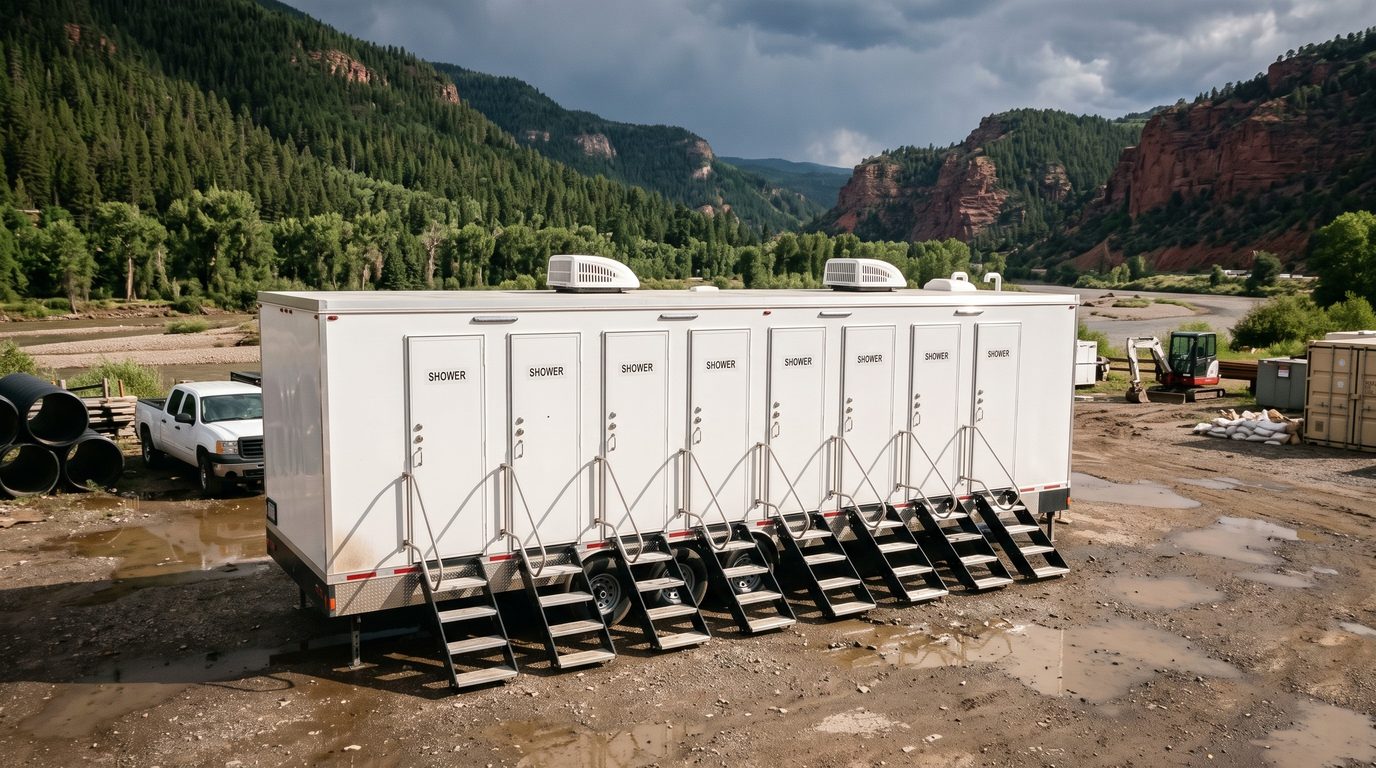
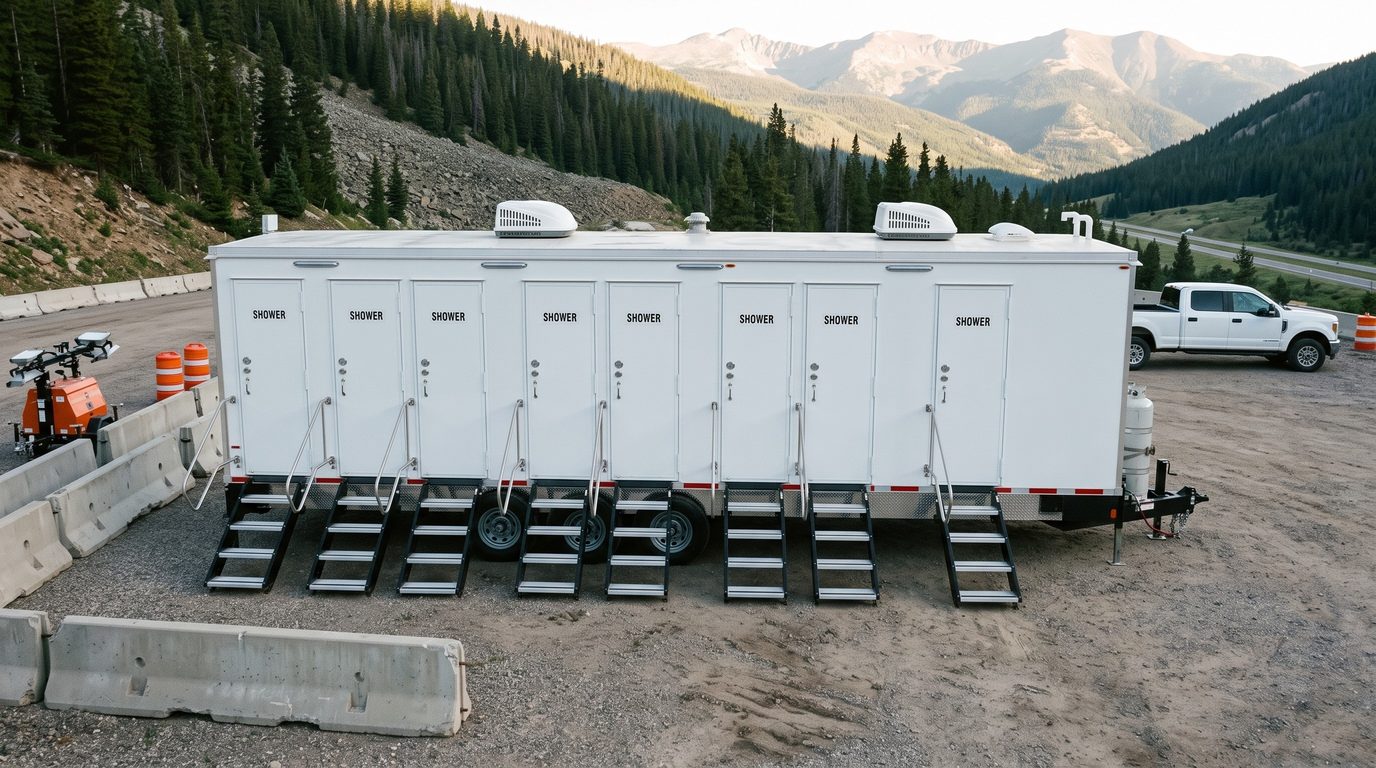
Eight stall shower trailer on a gravel staging area above Interstate 70 near Vail Pass
An eight stall shower trailer on a highway crew staging lot above I-70 near Vail Pass, jersey barriers, traffic drums and a light tower beside it.
CredentialsLicensed and insured

Certificates of insurance on request.

TerritoryEvery Colorado county

Any town, quoted with a haul time.

Dispatch(866) 879-1053

Quotes and bookings on the call.

The unitsEight stall and accessible

Compare the trailers

COFar corner reviews

Reviews from shower trailer deliveries far from the Front Range

Rated 4 out of 5

We are two hours past anything out near Burlington. They gave us a delivery window instead of a promise, and the truck showed up inside it.

Wade J.Burlington · Wind farm site manager

Rated 5 out of 5

Getting a trailer to Cortez in February meant routing around a closed pass. Dispatch called the night before with the plan.

Lorena G.Cortez · Utility project lead

Rated 5 out of 5

Hauled water twice a week kept the showers running all season.

Brent O.Meeker · Pipeline superintendent

More reviews from Colorado crews on the homepage

AHow this reads

How to read this page

This page is organized the way we think about the state. First the five places that generate the most calls, each written out with the local economy, the ground, the season and the work that actually turns into a shower trailer. Then the rest of the map grouped by region, because a town on the eastern plains and a town in the San Juans have almost nothing in common in practice. Then the logistics, which is the part that decides whether a date we give you is real.

The towns named as places we have delivered to are exactly that. They are not the limit of where we go. Colorado is the whole territory, plains to high country, and a site that is not named here only means we have not written it up yet.

If you are reading this to work out whether your job is feasible, the fastest route is the last four sections rather than the first ones. Passes, altitude, winter and the water and waste haul are what limit a Colorado delivery. The equipment almost never is.

Where we deliver shower trailers in Colorado Colorado drawn from federal boundary data, with all sixty four counties outlined and interstates 25, 70 and 76 marked. The towns our crews have already set shower trailers in are plotted at their real positions: Fort Collins, Denver, Englewood, Colorado Springs, Buena Vista, Palisade, Grand Junction, Austin, Ridgway and Durango. The whole state is shaded as delivery territory, with the counties holding those towns picked out in a deeper tone. Fort CollinsDenverEnglewoodColorado SpringsBuena VistaPalisadeGrand JunctionAustinRidgwayDurango I 70I 25I 76
Real county lines and real interstate routes, with the towns our crews have set trailers in plotted where they actually sit. The five in rust are the markets written out below. Shading marks the counties holding those towns; the territory is the whole state. County outlines and interstate routes are drawn from public federal boundary data. Markers show towns we have delivered to; delivery territory is the whole state.

CORenting

How renting one works

  1. Step 01

    Start with the site

    Where it is and when you need it, then how many people wash at the end of a shift.
  2. Step 02

    Get the quote

    It names the unit and the service plan, with the assumptions written next to them.
  3. Step 03

    Paperwork and pad first

    Vendor forms and insurance certificates cleared, and a firm spot the service truck can reach.
  4. Step 04

    Set, tested, serviced

    The unit is leveled and tested stall by stall, then serviced on the agreed rhythm until pickup.

Call (866) 879-1053 Request a quote

CBy region

Every other region, grouped by how it behaves on a pad

Colorado is five or six operating environments rather than one, and the right plan changes with which of them your site sits in.

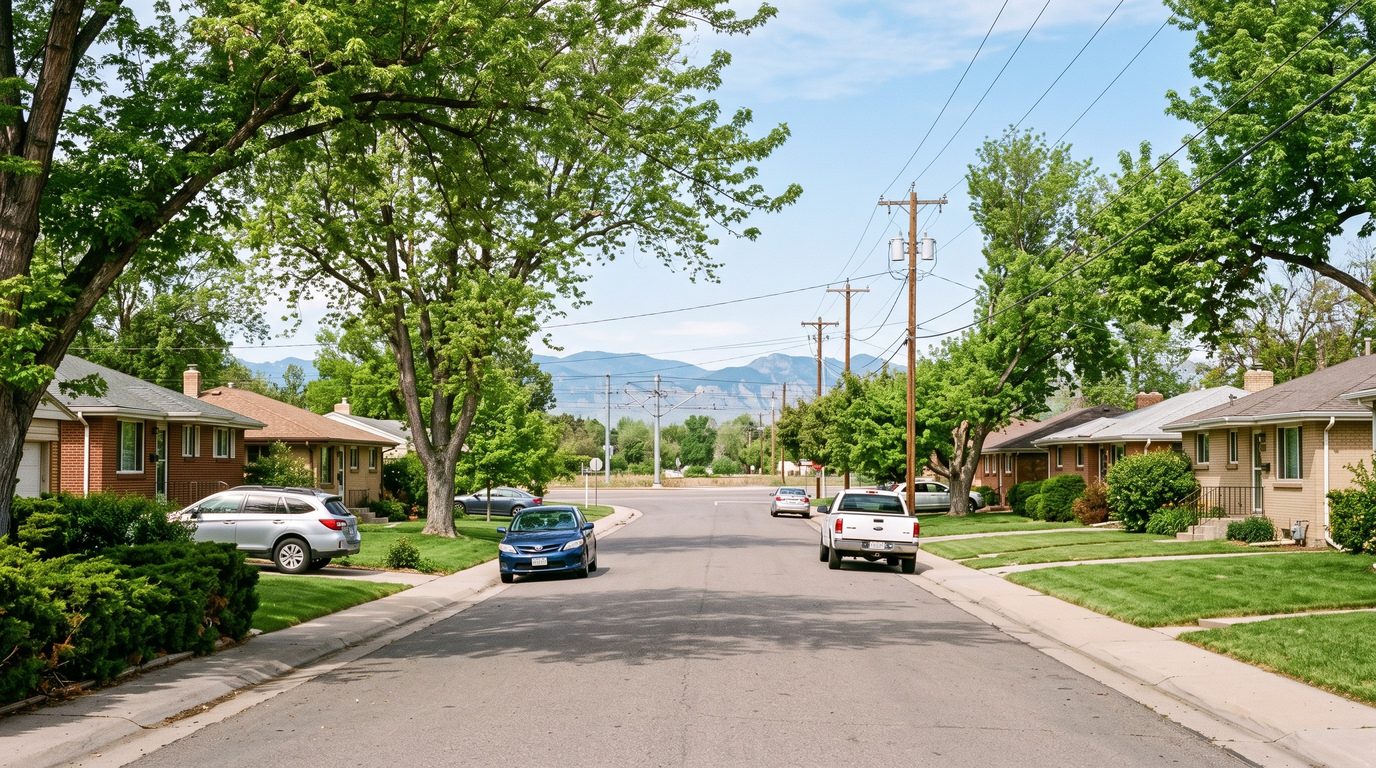
Tree-lined residential street in Englewood, Colorado, foothills to the west
A brick-bungalow street in Englewood on the south metro edge, the foothills low in the west.

Front Range corridor

The interstate spine from the Palmer Divide north through the metro to the state line holds the large majority of the state's population and the bulk of its permitted construction volume. Ground is flat to rolling between roughly four and a half and six and a half thousand feet, access is mostly paved, and the placements divide cleanly into tight urban infill sites and raw dirt pads out on the growth edges.

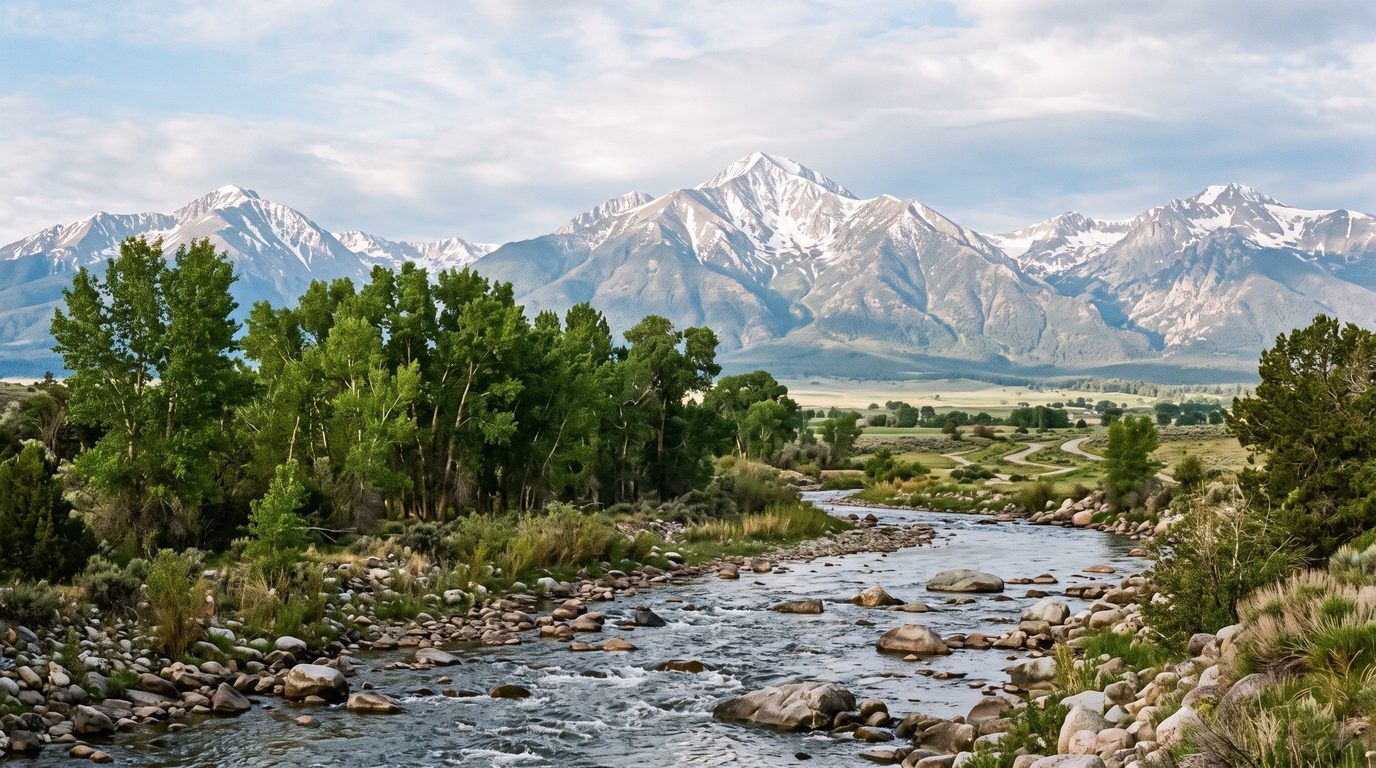
Arkansas River at Buena Vista, Colorado with the Collegiate Peaks behind
The Arkansas River at Buena Vista under the Collegiate Peaks.

Central mountains and the mountain corridor

The band of high valleys and resort towns above seven and a half thousand feet, reached over the passes on the interstate corridor. This is where altitude, deep cold and road closures converge hardest, and where a summer construction window at a ski area has to fit between the last skier and the first snow. We have set up in Buena Vista on the upper Arkansas River, with the Collegiate Peaks behind the valley.

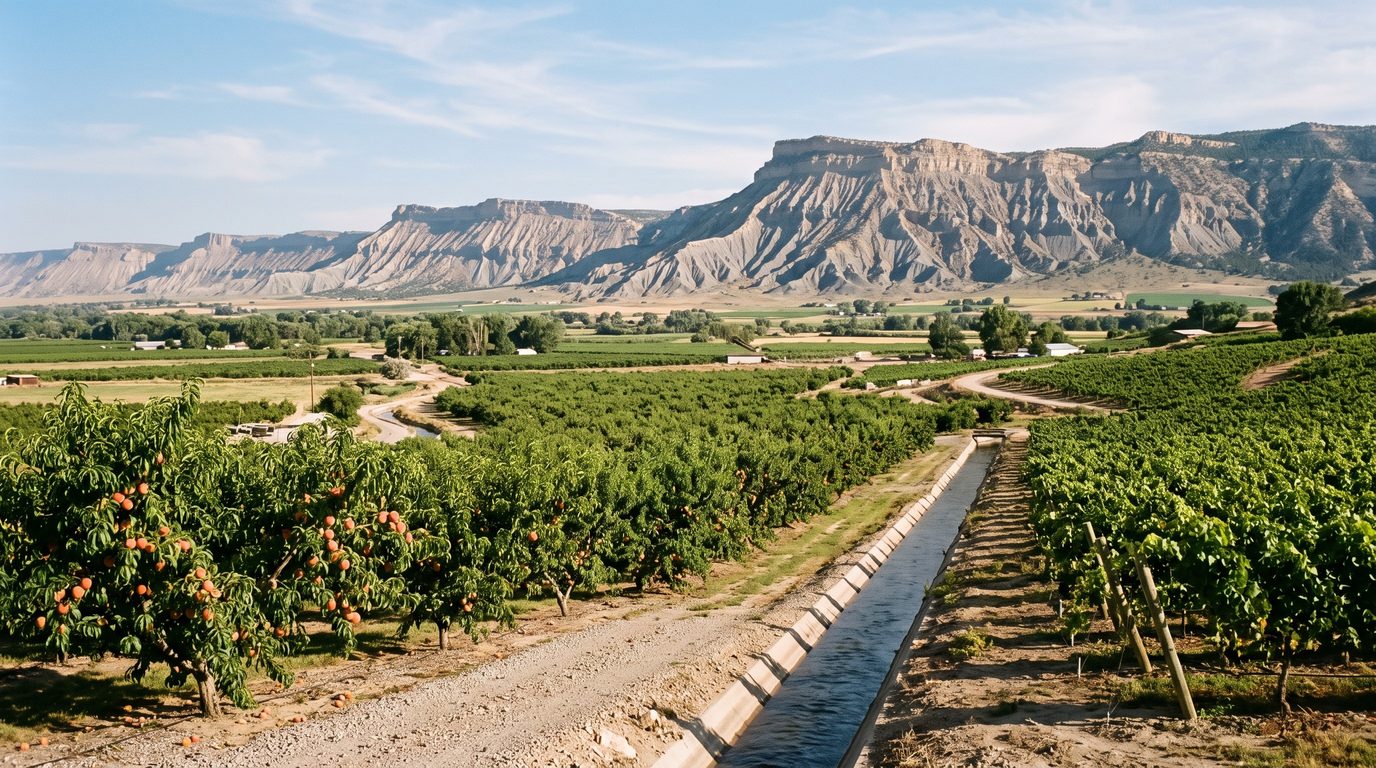
Peach orchards and vineyard in Palisade, Colorado below Mount Garfield
Palisade orchards and vines below Mount Garfield and the Book Cliffs.

Western Slope and the Grand Valley

Everything west of the Continental Divide, with the farmed valley around Grand Junction and Palisade as its economic core and high desert mesas, the gas bearing basin and long distances in every direction around it. Hot dry summers, real wind, cold but less extreme winters, and a spring mud season on unpaved roads that limits access as effectively as snow.

Blossoming orchards and hay fields near Austin, Delta County, Colorado, Grand Mesa behind
Spring orchards near Austin in Delta County, Grand Mesa on the horizon.

North Fork and Uncompahgre valleys

South and east of the Grand Valley, the highways run through fruit, farm and ranch country and then into the mountains. Delta County's orchards and hayground sit at one end and the foot of the San Juans at the other. We have set trailers in Austin in Delta County and in Ridgway, and the work here is usually private land, a well, a long power run from a barn or shop and a seasonal crew on the place for weeks.

Mount Sneffels and aspens from the Dallas Divide near Ridgway, Colorado
Mount Sneffels from the Dallas Divide near Ridgway, aspens in gold.

San Juans and the southwest

One of the most rugged ranges in the lower forty eight, with a legacy of hardrock mining towns that now run on tourism and recreation, and Durango as the regional hub. Narrow two lane access over passes that close for avalanche control and accidents, long summers of monsoon storms, and haul distances for both delivery and pump out that are unlike anywhere else in the state.

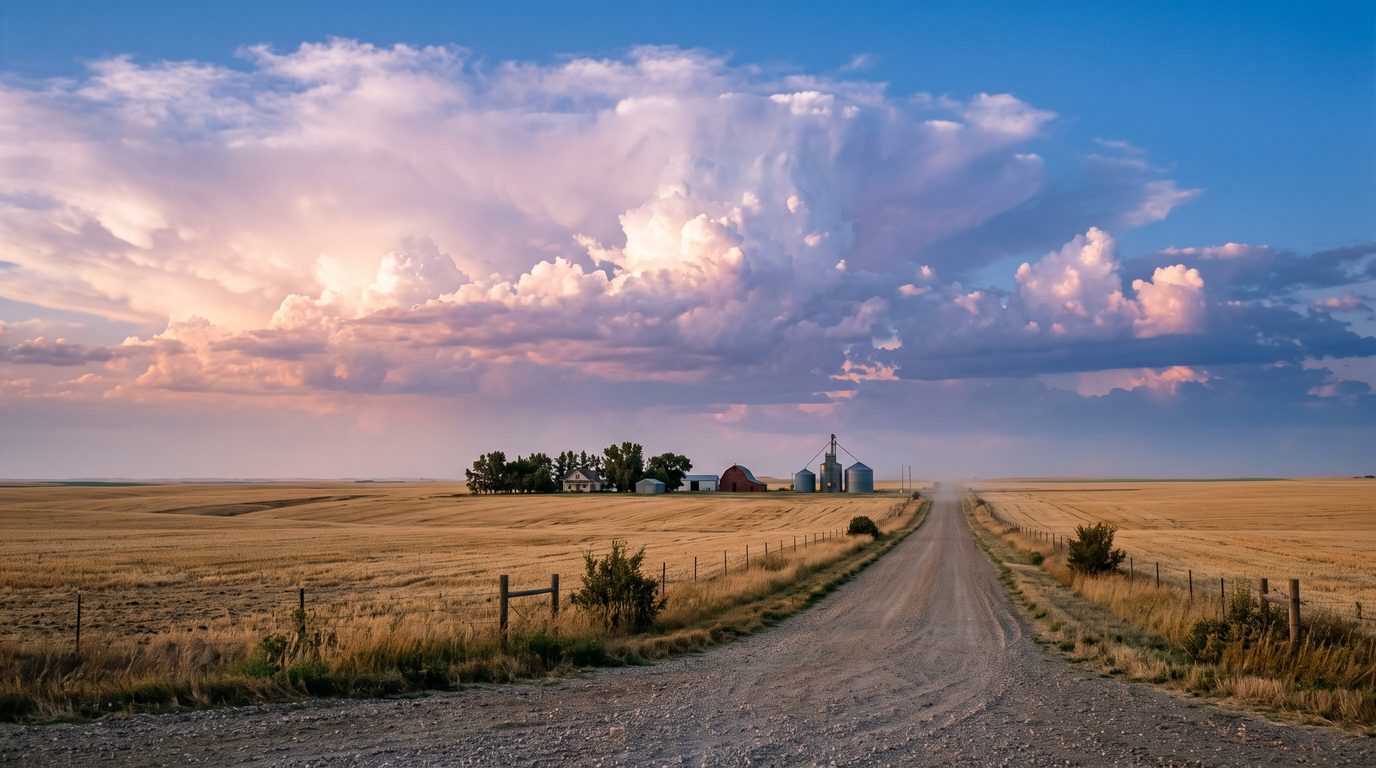
Wheat stubble and a gravel road on the eastern plains near Burlington, Colorado
Wheat country on the eastern plains near Burlington.

Eastern plains

Semi arid grassland and farm fields between roughly three and a half and five thousand feet, where cattle and dryland farming carry the regional economy. Wind is the defining operational factor: it affects a trailer's stability once it is unhitched, it makes doors and awnings harder, and it drives wind chill hard in winter. Towns are far apart, which makes water hauling and service response the constraint rather than terrain.

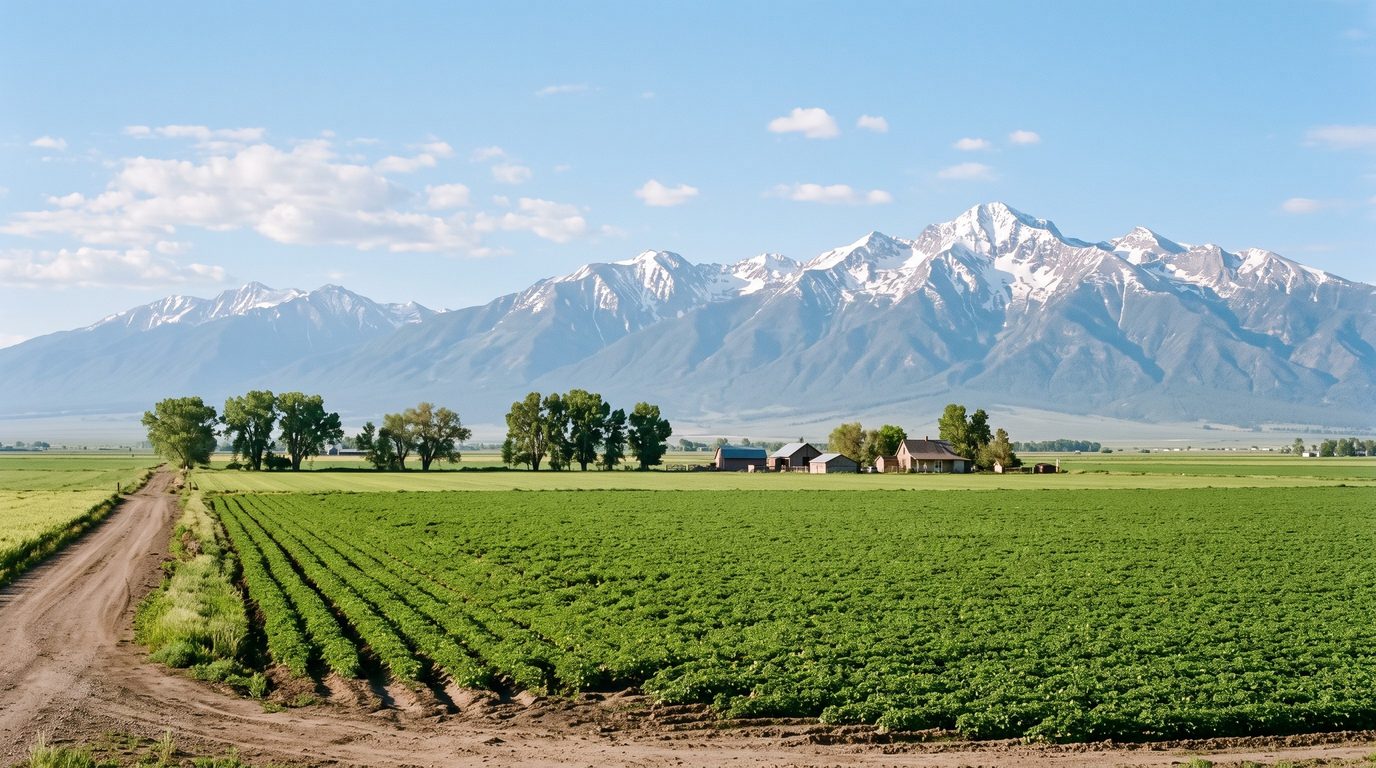
San Luis Valley farm fields below Blanca Peak, Colorado
San Luis Valley fields below Blanca Peak.

San Luis Valley and the south

A high, wide agricultural valley ringed by mountains, with the southern counties and the route toward the southwest corner running through it. Cold, dry and open, with long distances between anything and a pass at the far end of most journeys out of it.

Sagebrush benches and the White River valley near Rangely, Colorado
White River country near Rangely in the far northwest.

Northwest and the far corners

Take Rangely in the far northwest, about five hours from Denver: name the town, and the haul and the window get quoted honestly, not hopefully. Not being named on this page means we have not written about a place yet, not that we do not go there.

The towns marked on the map above are the ones our crews have already set trailers in. Everywhere else in the state is a quote and a haul time, not a refusal.

DPasses

Shower trailer delivery routes over Colorado mountain passes

Any delivery that crosses the divide goes over or through something that shuts. The mountain corridor on the interstate, taking in Vail Pass and Glenwood Canyon, is the main artery to the Western Slope and it is also a choke point. Storms have closed that stretch well over two hundred times across recent winters, and Vail Pass alone typically closes somewhere between fifteen and twenty five times in a season, concentrated from December into March. Southwest of that, the passes on the road toward Durango close for avalanche control and accidents on their own schedule.

So a winter haul gets planned as a route plus a window plus a backup day, not as an arrival time. Dispatch watches the corridor forecast and the live closures on COtrip, the CDOT road conditions map, picks a departure that puts the truck through the tight section before the weather lands, and moves a delivery rather than sending a driver at a corridor that is closing. An honest window beats a promised hour in every direction, and it beats it most in January.

The southwest corner deserves its own warning. From the Front Range there are two ways in and both are mountain roads. Neither is a same day proposition in winter, and we would rather say that on the first call than discover it with a loaded trailer at the top of a pass at four in the afternoon.

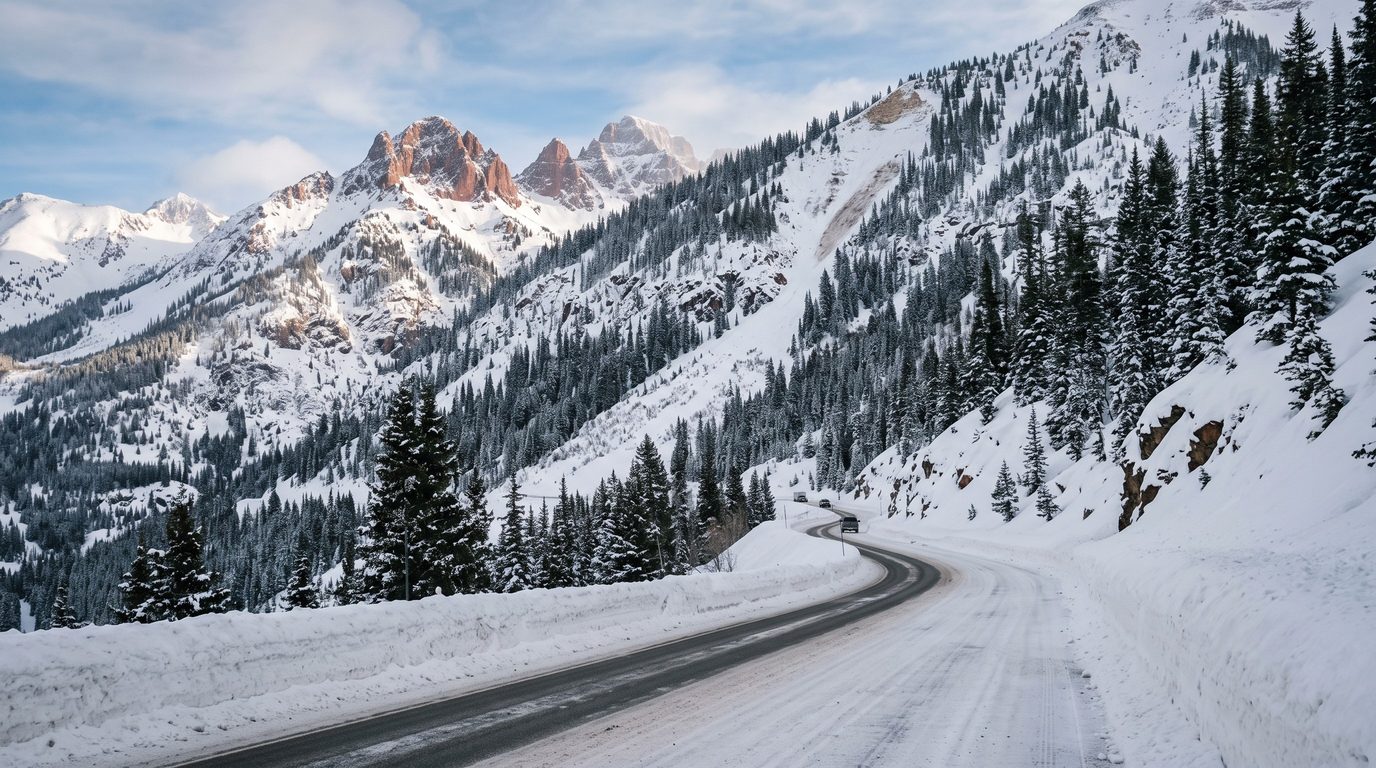
US 550 Red Mountain Pass above Ouray between plowed snowbanks
US 550 over Red Mountain Pass in winter, cleared between banks of snow.

ETraction law

Chains, tread and what the law asks of a delivery truck

Colorado's traction law applies to the mountain corridor from roughly Dotsero to Morrison between the first of September and the thirty first of May. It requires adequate tread depth plus snow tires, tires rated for mud and snow, or chains or other traction devices. Commercial vehicles face stricter chain up requirements and enforcement in storm conditions, along with lane restrictions at the higher risk stretches including Vail Pass and Glenwood Canyon.

For us that is simply part of the job rather than a contingency. Drivers working that corridor carry chains, know how to fit them before they are standing in a storm at dusk, and treat a chain up as an ordinary step rather than a last resort. The alternative is a truck and a trailer parked on a shoulder waiting for a corridor to reopen, which helps nobody and is exactly what the law exists to prevent.

It matters to your schedule because it is the reason a winter high country delivery carries buffer. A crew that is equipped and trained for the conditions still cannot drive through a closure, and the closures are frequent enough to plan around rather than hope past.

FAltitude

What thin air does to the equipment

Elevation changes two things that matter and it changes them quietly. The first is generator output. Combustion engines lose power as the air gets thinner because there is less oxygen available for combustion, and the common industry rule of thumb is a loss of a few percent for every thousand feet gained. By the time a generator is working at mile high Denver it has already given up a meaningful slice of its sea level rating, and on a high country valley floor or a high desert mesa the shortfall is considerably larger.

The second is burner performance in the water heating, for the same reason. A heater configured on a bench near sea level is not configured for a pad at nine thousand feet, and the symptom of getting that wrong is not an error message. It is lukewarm water halfway through a shift change, which is how a crew stops trusting the unit.

Both problems can be fixed and both are fixed before the truck leaves, by sizing and setting up against the elevation of the actual site rather than the specification of the trailer. When a customer is supplying the generator we will tell you plainly what it needs to be able to do at your elevation rather than at the yard's, because a machine that is comfortably adequate on the Front Range can be genuinely too small at the top of a mountain valley.

GWinter operation

What a cold weather placement actually needs

Subzero nights are routine in the high mountain valleys through the winter, and most winters see stretches well below zero somewhere in the high country. Snowpack builds in layers and persists into June at the higher elevations. The Front Range and the eastern plains are milder on average and still deliver hard cold snaps that will find any unprotected line. That means essentially any winter job in this state, at any elevation, needs full freeze protection rather than partial.

Full means heat traced and insulated supply and waste lines, thermostatic tank heat that cycles well above freezing rather than at it, continuous interior heat, a heated plumbing bay and skirting where wind reaches the undercarriage. Anything above about eight thousand feet from November through April gets that as an absolute baseline, and so does anything lower that is going to sit through a cold snap.

Access is the other half of winter. A lane cleared once for the delivery and then ignored will strand the service visit two storms later, so somebody on your side has to own keeping the approach open for the length of the rental. That is worth settling before the unit is set rather than discovering when a vacuum truck cannot reach the pad in February.

Spring is the season that catches people who prepared properly for winter. As the frost comes out of the ground, unpaved mountain and Western Slope roads soften, and access can be worse in April than it was in January. We plan placements for the pad's worst condition across the rental rather than its condition on delivery day.

HBoth ways

Water hauling and waste pumping over Colorado distances

On a site with no hookups, two logistics chains run for the length of the rental. Potable water comes in on a schedule. Waste goes out through a licensed hauler to an approved treatment facility, normally with a manifest for the load. Neither ever touches the ground on your site.

Distance is what makes this a Colorado problem rather than a generic one. On the Front Range the round trip between a pad and a receiving facility is short and a cadence can be tightened at short notice. On a mesa top in the Grand Valley, in the gas patch, in the San Juans or out on the plains, that same round trip can consume most of a working day, so the schedule has to be built around the haul instead of a convenient weekly rhythm. The practical consequence is that a remote placement needs its service cadence right from the start, because correcting it mid rental costs a day rather than an hour.

Irrigation water is never a source, which comes up in valley agriculture more than anywhere else. A ditch running past the pad is not potable and does not go into a shower trailer. On an orchard job outside Palisade, where the only water nearby runs in an irrigation ditch, the plan is hauled potable water, sized from headcount before delivery.

The last complication is signal. Remote ranch country, the deeper gas patch and high mountain venues frequently have no cell coverage at the pad, and a service plan that depends on a phone call nobody can make is not a plan. Those placements run to a fixed schedule agreed in advance with the windows written down.

IDrive time

What a delivery date can honestly be

We quote drive time honestly, which mostly means saying out loud that Colorado is wider than it looks. A Front Range delivery and a southwest corner delivery are different jobs even when the mileage is not wildly different, because one is interstate and the other is mountain two lane with passes on it.

Setup itself is not the variable. Leveling, connecting, filling or connecting for water and testing every stall happens on the same visit once the unit is on site. What moves a date is transport and routing: a high country or southwest destination where pass routing and seasonal closures can add real hours, or in a bad storm window, a day.

Before a truck is committed to a canyon or a high valley address, dispatch works through a short list about the approach. None of it is unusual and none of it takes long to answer, but between them these questions decide whether a placement is a quiet two hours or a ruined afternoon. If you do not know an answer, say so rather than guess, and we will put eyes on it instead of trusting a satellite image.

  • How steep, and for how long? A short pitch is nothing. A mile of climbing on marbles changes the whole tow, and it changes it again on the way back down.
  • Where does the rig come about? Somewhere near the drop point there has to be room to swing around. Reversing a long unit half a mile in the dark ends badly for the equipment and worse for the driver.
  • What is under the tires after rain? Packed gravel holds. New fill and green pasture do not, and one afternoon storm can undo ground that looked perfect at noon.
  • What hangs over the road? Limbs and utility drops set the height limit for the whole route. Somebody should run it in a tall vehicle before delivery day.
  • Who keeps it open once winter sets in? A lane cleared for the delivery and then ignored will strand the next service visit two storms later.

Ready to check your dates? Call (866) 879-1053 or send the details, and read the equipment page if you want the specification before you call.

CONext step

Shower trailer delivery quotes for any Colorado town

Tell us which town, and which week, and the haul gets priced honestly.

(866) 879-1053

Or send the request form