
Home/Reach Us
COReach us
Shower trailer rental dispatch and quotes, anywhere in Colorado
Dial (866) 879-1053. Quotes, scheduling, service visits and questions all go to the same line.
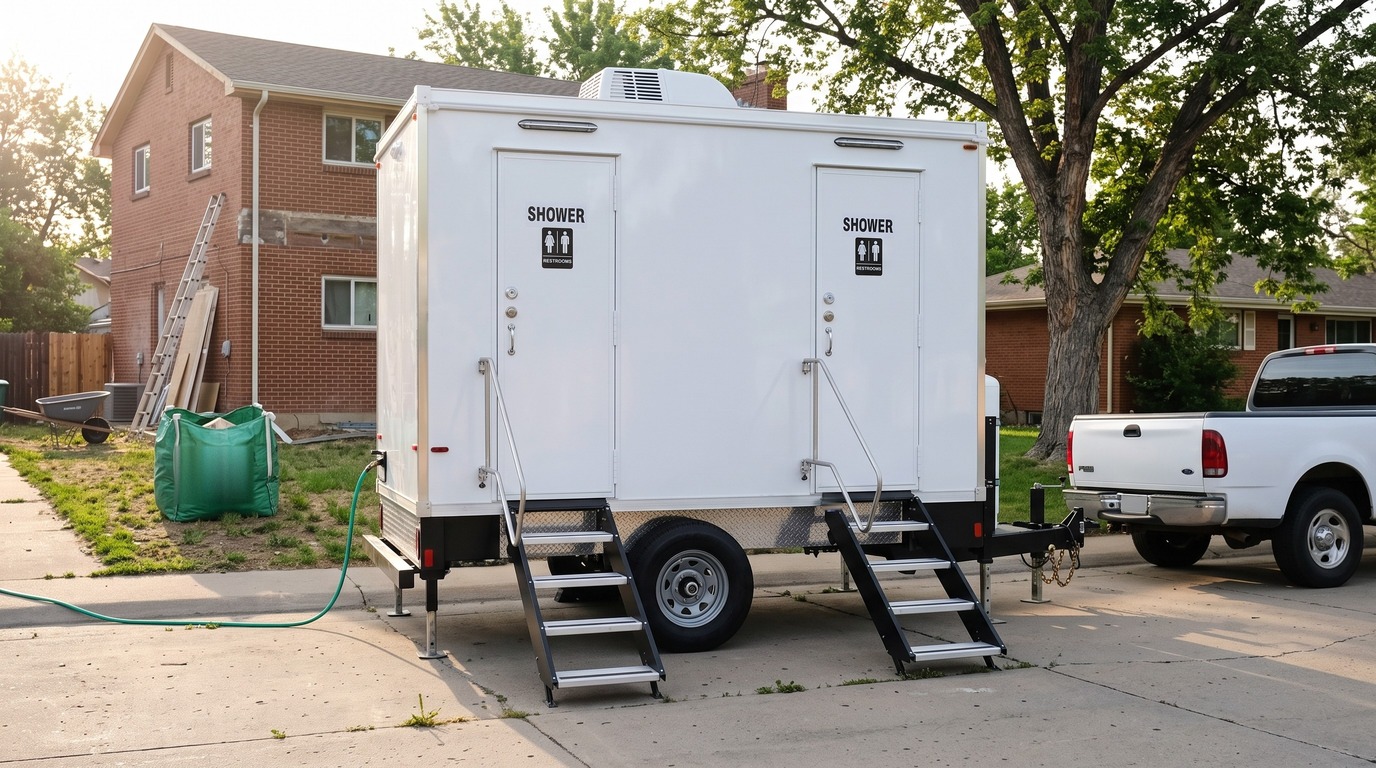
Certificates of insurance on request.
Any town, quoted with a haul time.
Quotes and bookings on the call.
COCaller notes
Reviews of the dispatch line from people who called
Rated 5 out of 5
Called at six in the morning and a person picked up who knew what was on the yard. We had a unit booked before my coffee was done.
Rated 5 out of 5
Our generator got shut off overnight and the heat dropped. One call and they talked my guy through the restart in ten minutes.
Rated 5 out of 5
Needed a number for a bid due at noon and got it on the call.
AVoice
The phone is the fastest route
Ring (866) 879-1053 and a person picks up who can work out what unit suits the job, look at what is already committed, and put a date on the board without passing you along. There is no menu and no queue.
That is not a service promise so much as a description of how the company is built. The people who answer are the people holding the schedule, which is why a call usually ends with an answer rather than with somebody undertaking to find out. A quote, a hold on a week, a service visit moved, a straight no on dates that are already spoken for. All of those can happen inside one conversation.
When the line goes to voicemail it is because everybody is out on a delivery. Leave the town and the week you are working with and the callback already has something useful in it rather than starting from the beginning. If the matter is a unit already on your site and something is wrong with it, say that first, because those calls go to the front.
Quotes, scheduling and service, one number.
Send the site, the dates and the headcount and we reply with real availability.
Open the formThe whole state. See the towns we have already delivered to and how we plan the haul.
CoverageCORenting
How renting one works
- Step 01
Start with the site
Where it is and when you need it, then how many people wash at the end of a shift. - Step 02
Get the quote
It names the unit and the service plan, with the assumptions written next to them. - Step 03
Paperwork and pad first
Vendor forms and insurance certificates cleared, and a firm spot the service truck can reach. - Step 04
Set, tested, serviced
The unit is leveled and tested stall by stall, then serviced on the agreed rhythm until pickup.
BOpening minutes
What gets asked, and why each answer matters
The first call is short and it is mostly us asking about the site rather than telling you about trailers. There are seven things that between them decide the unit, the stall count, the logistics plan and the price, and once we have them the rest usually falls out on the same call.
Where the site is, in enough detail to route a truck to it, including what the last mile is made of. When you need it and for roughly how long. How many people will use it, and critically, whether they arrive together or spread out. What the pad is: gravel, dirt, concrete or grass, and whether it stays firm after rain. What is available in the way of water, power and waste, honestly rather than optimistically. Whether an accessible unit is required. And who will actually be standing there when the driver arrives.
The one that surprises people is the rotation question. Headcount alone does not size a shower trailer, because forty people coming off one shift together is a completely different problem from forty people arriving across an evening, even though the daily total is nearly identical. Two minutes on the shift pattern is worth more than any other part of the call.
You do not need all of it to ring us. The town and the dates are enough to start, and we will ask for the rest as we go. If an answer is genuinely unknown, say so rather than guess, because a guessed pad condition is how a delivery turns into a wasted afternoon for both of us.
CHave ready
Details that let us quote on the spot
- Site location. An address or a map pin, plus how a tow vehicle gets there if the last mile is gravel or a lease road.
- Dates. Start and end, even if the end is a rough range.
- Headcount and rotation. How many people, and whether they come off shift together or spread across the evening.
- The pad. Gravel, dirt, concrete or grass, and whether it stays firm after rain.
- Utilities. Water, power and waste on site, or none of them.
- Elevation. Roughly how high the site sits, because it changes generator sizing and heater configuration.
- Accessibility. Whether an accessible unit is required and where the accessible route runs.
- A site contact. Who will be there when the driver arrives, and who gets the call during the rental.
- Paperwork. Any vendor setup, insurance or safety forms your organization requires.
Photographs help more than descriptions do. Two or three pictures of the pad and the approach, taken from where a truck would come in, answer questions about grade, overhead lines, turning room and ground condition faster than any amount of talking. If the site has a gate or a lease road, a picture of that too.
None of this is a form you have to complete before calling. It is simply the list of things that, if you happen to have them in front of you, turn a two call process into one.
DEmergencies
Incidents, fires and the days when nobody has a purchase order
Incident work does not wait on a signed order and neither do we. Say what has happened and where people are gathering, and you will hear straight away which unit can roll and roughly when it can land. The paperwork follows. On that kind of call the useful information is short: the location, the rough headcount, whether there is water or power of any kind, and who on the ground can take a phone call.
Wildfire work runs on its own structure rather than a commercial booking. Base camp facilities including showers, laundry and toilets are standard elements of an incident's facilities planning and appear on a formal facilities map alongside catering, briefing areas and parking. That means the conversation runs through the incident's logistics section and the base or camp manager, and the placement has to fit whatever site, spacing and safety requirements the facilities unit leader sets for that specific fire. We are used to working that way, and we do not expect an incident to conform to how a construction site would order equipment.
Flood and infrastructure recovery is the other emergency shape, and it is different again. When a community's water or wastewater system goes down, the need is for hygiene capacity in the middle of a place that normally has plumbing, and the site conditions are whatever the event left behind. Roads may be gone. Access may change between the call and the delivery. We plan those with a route check rather than an assumption, and we keep the site contact in the loop while the truck is moving.
What we will not do on an urgent call is promise a time we cannot make in order to sound responsive. If a corridor is closed, or the unit that fits your headcount is four hours away on the far side of a pass, that is the first thing you hear. In an emergency an accurate arrival window is worth considerably more than an optimistic one.
ELead time
Same week, peak season and placements measured in months
Short notice is worth asking about rather than assuming. Either something is free or it is not, and finding out takes two minutes. The honest constraint is usually not equipment but haul time, because a site four hours away over a pass cannot be served this afternoon however willing everybody is.
Dated work is easiest to serve when the inquiry lands early. From early summer into the autumn the arenas, fairgrounds, river towns and festival grounds all want the same handful of weekends, and a dry fire season can take units out of the commercial schedule with no notice at all. A late inquiry is still worth making, but the answer gets less flexible the deeper into the summer it lands.
Winter high country work has a different constraint. The equipment side is straightforward as long as the freeze protection is specified properly, and the schedule side is not, because the corridors close repeatedly through storm season. Those deliveries get booked with buffer built in rather than to an arrival hour.
Placements measured in months come with the service schedule written into the quote. It gets adjusted once we have seen a real week of use, and after that it runs by itself with nothing for you to chase. Long placements are the easiest work we do, and they are the ones where getting the first conversation right pays back the most.
FAfterwards
What happens between the conversation and the trailer
The quote comes back with its assumptions written next to it, so when the scope shifts you can see which part of the quote shifts with it. That matters most on jobs where the headcount is a projection rather than a fact, which is most of them.
Once you confirm, the job goes on the board with the haul time built in and the service cadence set from the numbers you gave us. In parallel, anything your organization needs on paper gets cleared: vendor registration, a certificate of insurance naming the right parties, a W-9, a safety orientation, a written service plan. Sending that link on the first call rather than the week of delivery is the single easiest way to keep a delivery date intact.
Then the pad question gets closed out. For a straightforward site that is one short exchange. For a canyon address like a cabin site up Boulder Canyon, it may mean photographs of the approach or somebody putting eyes on it. This is the step that most often reveals something worth knowing, and it is far cheaper to find out now than with a loaded trailer at a gate.
On delivery day the unit is set and leveled, connected to whatever the site has, filled or connected for water, and tested stall by stall rather than switched on and declared working. Your site contact gets a walkthrough at the unit before the driver leaves, and it ends with the dispatch number, (866) 879-1053, saved in their phone. After that the rhythm takes over and you should not have to think about it much.
GWritten
Sending a shower trailer request by form or email
The request form takes the same details we ask for on the phone and sends them to the person handling your part of the state. It suits typing from a job trailer at night, or gathering answers from three people before you commit to anything. What comes back is a call or a written reply with real availability, not an automated brochure.
Email works the same way and has one advantage worth knowing about: attachments. Site photographs, a plan sheet, a vendor packet or a scope document are all more useful to us than a description, and they go into the quote rather than being re read later.
If you need an answer inside the hour, use the phone. Written requests get worked properly, and properly takes longer than a conversation does.
One thing worth doing in a written request that is hard to do on a call: give us the bad news about the site. The grade that is steeper than it looks, the gate that only opens at certain hours, the ground that was soft last spring, the fact that nobody has actually measured the turning room. Those details are what a quote is built on, and a written request is the easiest place to put them down honestly without feeling like you are talking yourself out of anything. You are not. A quote built on an accurate site is a quote that survives contact with delivery day.
We reply to the address the request came from unless you tell us otherwise. If the person who should receive the quote is somebody else, say so in the message rather than forwarding it later, because the quote and the scheduling conversation work best when they are with the same person.
HAuthority
Dispatch staff who can quote and book on the first call
The line goes to the people who keep the schedule, which is the part that matters. They can see what is on the yard, tell you whether the week you want is real, and hold a unit while you square it with your own side. Nothing has to go to another department and come back tomorrow.
The flip side is that you get the constraints plainly. If the only unit that carries your headcount is spoken for until the middle of the month, that is the first thing you hear, not the thing you discover after building a schedule around it. Bad news on Monday is worth more than good news that falls apart on Friday.
Ask whatever you need to ask. How the unit gets serviced, what the driver will want from your site contact, what happens if weather moves the dates, what we would do differently if the ground is soft in April. None of it is confidential and all of it is cheaper to settle before the paperwork than after it.
IBidding
Quoting a job that has not been awarded yet
A good share of the calls we take come from estimators working on something nobody has won yet. That is normal and it is worth doing properly rather than pulling a figure off an old email. Tell us it is a bid, give us the location and roughly how long the work runs, and the quote comes back with the assumptions written next to it, so when the scope shifts you can see which part of it shifts with it.
If the award lands months later, call back with the same job name and we will pull up what we sent. Most of the time that turns the second conversation into a confirmation instead of starting over.
When the schedule slides, tell us that too. A quote from last season is usually still workable, but availability in high summer is a different animal from availability in the middle of winter, and it is better to look at it again than to plan against something stale.
JDuring the rental
Something wrong with a unit already placed
Call the same number. A heater acting strange, water pressure that dropped, a door not latching, a pump schedule that needs to move because the crew size changed. We would rather hear about a problem at ten at night than at seven in the morning when the unit is frozen.
Give us the site name and what you are seeing, and we will either walk your contact through it or dispatch a service visit. A surprising proportion of these are solved on the phone, because the common ones have common causes: a generator that got shut down overnight, a gray tank closer to full than the schedule assumed, a breaker, a door that has dropped on its hinges after a month of hard use.
Changes are the other half of this. Crews grow, dates extend, a unit needs to move twenty feet because the site plan changed. All of that is ordinary and all of it is easier with notice. Tell us and the schedule gets reworked rather than discovered at the next visit.
On a site with no cell coverage, the arrangement is different and it gets made up front. Those placements run to a fixed plan with the service windows written down, and any change goes through whoever on your side does have signal.
KWrapping up
The end of a placement, and what is left behind
Tell us when the job is finishing and the pickup goes on the board the same way the delivery did. On a long placement that is usually a week or two of notice, which is enough to schedule a final pump out so the unit leaves empty rather than traveling full. On a short event it is often decided before the unit ever arrives, because the strike window is part of the venue's own schedule.
On pickup day the unit is drained, disconnected and hauled out, and the pad is left as we found it. If we brought matting or cribbing, it comes with us. If the placement ran through a winter, the unit gets properly winterized for the road rather than driven away with water in it.
Dates moving at the end of a job is normal and it is easy to accommodate with notice. A crew that finishes two weeks early and a crew that runs three weeks long are both ordinary. What causes trouble is nobody saying anything, because a unit sitting on a finished site is a unit that is not available to the next job and is still accruing a service schedule.
Anything we learned about your site goes on the record: how the approach behaved, where the unit actually sat, what the ground did in the wet. If you come back to the same site next season, that is the difference between starting the conversation from scratch and starting it from what we already know.
It is also worth telling us what did not work. A service window that never suited the shift pattern, a pump cadence that was tighter or looser than it needed to be, a placement that turned out to be twenty feet from where it should have been. None of that is a complaint and all of it makes the next placement better. The jobs that run most smoothly are almost always the second or third one on a site somebody told us about honestly the first time.
LWho calls
The people on the other end of this line
The callers sort into a handful of types and each one has a different first question. Superintendents and project managers on construction and civil work want to know whether a unit can sit on their site for months without becoming their problem, so the conversation is mostly about service cadence and pad condition.
Estimators are usually working on something unawarded and need a number they can defend with the assumptions attached. Energy and remote industrial planners want the logistics answered first, because the trailer is the easy part and hauled water, generator power and a pump route down a lease road are not.
Event producers, fairground and arena staff and race organizers are working backwards from a gate schedule to a stall count, and then to a spot on the grounds that a service truck can reach without driving through the middle of a crowd. That last constraint decides more event placements than anything else.
Agency and incident logistics people are working inside their own command structure and need us to fit it rather than the reverse. Ranch and farm managers are usually dealing with a seasonal crew on the place for weeks, private land, a well and a long power run. Facility and property managers are covering for a building whose hot water is offline and want to know how quickly the gap can be filled.
All of those conversations start the same way, with the site and the dates, and then diverge. You do not need to know which category you are in before you ring.
Personal and family calls happen too and they are welcome. A house with the plumbing torn out for a renovation, a property between a well failure and a repair, a family gathering on land with no facilities. A family reunion on a ranch outside Salida gets the same unit and the same questions as a job site, and the answers are usually simpler because the headcount is small.
MHours
When the line is answered and what happens outside that
The line is answered through the working day and well either side of it, because deliveries start early and site problems do not keep office hours. Weekends are covered during the event season and during any incident work, which in practice means most of the summer and a good part of the autumn.
Outside those windows, a message reaches somebody. What decides how fast it gets acted on is what it says. A unit on a site with a problem gets treated as urgent whatever the hour. A quote request lands on the next working morning, which is usually fast enough for something that has not been awarded yet.
If you are working an unusual schedule, say so on the first call and we will fit the service visits around it. Night shift work, a site that is only accessible between certain hours, a gate that locks at four, a venue that cannot take a vacuum truck before ten in the morning. None of that is difficult when it is known in advance and all of it is a problem when it is discovered by a driver at a closed gate.
Winter cuts the usable day considerably in the high country, and that shapes scheduling more than most people expect. A delivery over a pass wants to be moving early. In December the sun sets before five in Leadville, and the unit still has to be set and tested before dark, so a late start leaves no room. When we ask about arrival timing on a winter job, that is why.
NResponse times
Response times for dispatch calls, quotes and deliveries
Here is what to expect once you reach us, sorted by the kind of call. These are the times that usually hold, not a contract, and if a particular week is running slower you hear that on the first call rather than after it.
| Kind of call | What happens | Usual timing |
|---|---|---|
| A unit on your site is acting up | We talk your site contact through it or send a service visit | A unit already on your site: any hour, straight to whoever set it. |
| A fire, flood or evacuation | You hear which unit can roll and roughly when it lands | An answer on the first call, and a unit moving inside the hour when one is free |
| A quote by phone | A straightforward job gets its number on the same call | While you are on the line |
| The request form or an email | A call back or a written quote with real availability | The same working day, or the next working morning if it lands after hours |
| A bid on work nobody has won yet | A quote with its assumptions written next to it | The same or the next working day |
Once a unit is committed, drive time sets the landing. In good weather from the Denver metro, Colorado Springs and Fort Collins are each a little over an hour away. Grand Junction is about four hours over Vail Pass and through Glenwood Canyon. Durango is six to seven hours by either mountain route, and Lamar out on the eastern plains is about three and a half. Setup happens on the same visit and almost never decides the timing.
From November into April, put a buffer on anything that crosses a pass. Vail Pass alone closes somewhere between fifteen and twenty five times in a typical season, so a winter delivery to the Western Slope gets booked as a window with a backup day rather than as an hour.
If your site only takes deliveries at certain hours, say so when you book. A gate that opens at seven or a venue that cannot take a truck before ten moves the departure time, and the board plans around it from the start instead of finding out at the gate.
OBefore you ring
Common shower trailer questions before you call
Can the trailer run with no hookups at all? Yes. Generator for power, hauled water in, sealed tanks pumped out by a licensed hauler. That is the normal case for us rather than an exception, and it covers wellpads, fire camps, remote ranch work and backcountry events.
Where does the wastewater go? Never onto your site. Gray and black water are held in sealed onboard tanks and hauled to an approved treatment facility, normally with a manifest for the load.
How often does it need pumping? That falls out of tank capacity against actual use, so it depends on headcount and how many showers run in a day. A small crew showering occasionally goes several days. A full crew showering every evening can need it far more often. We set a starting cadence from your numbers and adjust it against what the tanks actually do.
Will it freeze? Not with the winter build, which is heat traced and insulated lines, thermostatic tank heat, continuous interior heat, a heated plumbing bay and skirting. It will freeze if somebody shuts the generator off overnight to save fuel, which is the single most common winter failure and the one we warn every site contact about.
Does altitude change anything? Yes, mainly generator output and burner configuration, both of which get sized against the elevation of your pad rather than a sea level rating.
Is there an accessible unit? Yes, an accessible stall plus two standard showers, and it needs a firm level approach and landing without steep grade breaks. Raise it early so the approach gets planned with the pad.
How level does the ground need to be? Firm and reasonably level. Gravel, packed dirt or pavement all work as long as the surface will not turn to mud or shift under the weight during the rental. Grading, matting or gravel on a soft or sloped site is normally the site contact's to arrange before delivery.
What permits does an event need? That is set by the host county's public health agency rather than by a single state rule, and it varies. Larger gatherings generally need an advance application, commonly around a month ahead, with fixture counts and inspection requirements differing county by county. Check with the host county rather than relying on a figure from somewhere else.
PVendor onboarding
Where to send paperwork and vendor forms
If your organization needs vendor registration, a certificate of insurance, a W-9 or a written service plan before the first delivery, tell us on the first call and we will handle it by email, including an IRS Form W-9 if your accounts payable team needs one. Agencies and general contractors often have a portal; send the link and we will complete it. The more of this happens before delivery day, the smoother delivery day is.
Public agencies, school districts and larger contractors each have their own process, and a few of them require documents that take time to produce. Raising that in the first conversation rather than the week of delivery is the difference between paperwork being a background task and paperwork being the reason a date moves.
Read the company page for how we work. The equipment page lists what is in each unit, and the reference desk has four long planning guides if you want the detail before you call.
CONext step
One call, the whole plan
The quote, the schedule and the service plan all come from the same conversation.
(866) 879-1053